This rhyming game uses a basket and a collection of small toys from around the house to build early phonological awareness in a fun, hands-on way perfect for young children.
Fun Rhyming Basket Activity for Kids
One of the simplest and most fun ways to help children learn about rhyming words is by using a rhyming basket. A rhyming basket is just a small collection of objects that sound alike when spoken out loud. Rather then memorizing words from a book, children get hands on sensory exploration of discovering which words rhyme.
This Montessori-inspired language activity encourages children to listen carefully to the words, match rhyming sounds, and build the early skills needed for reading and spelling. There is also lots of room for creativity for what about the object you are choosing to rhyme!
Setting Up Your Rhyming Basket
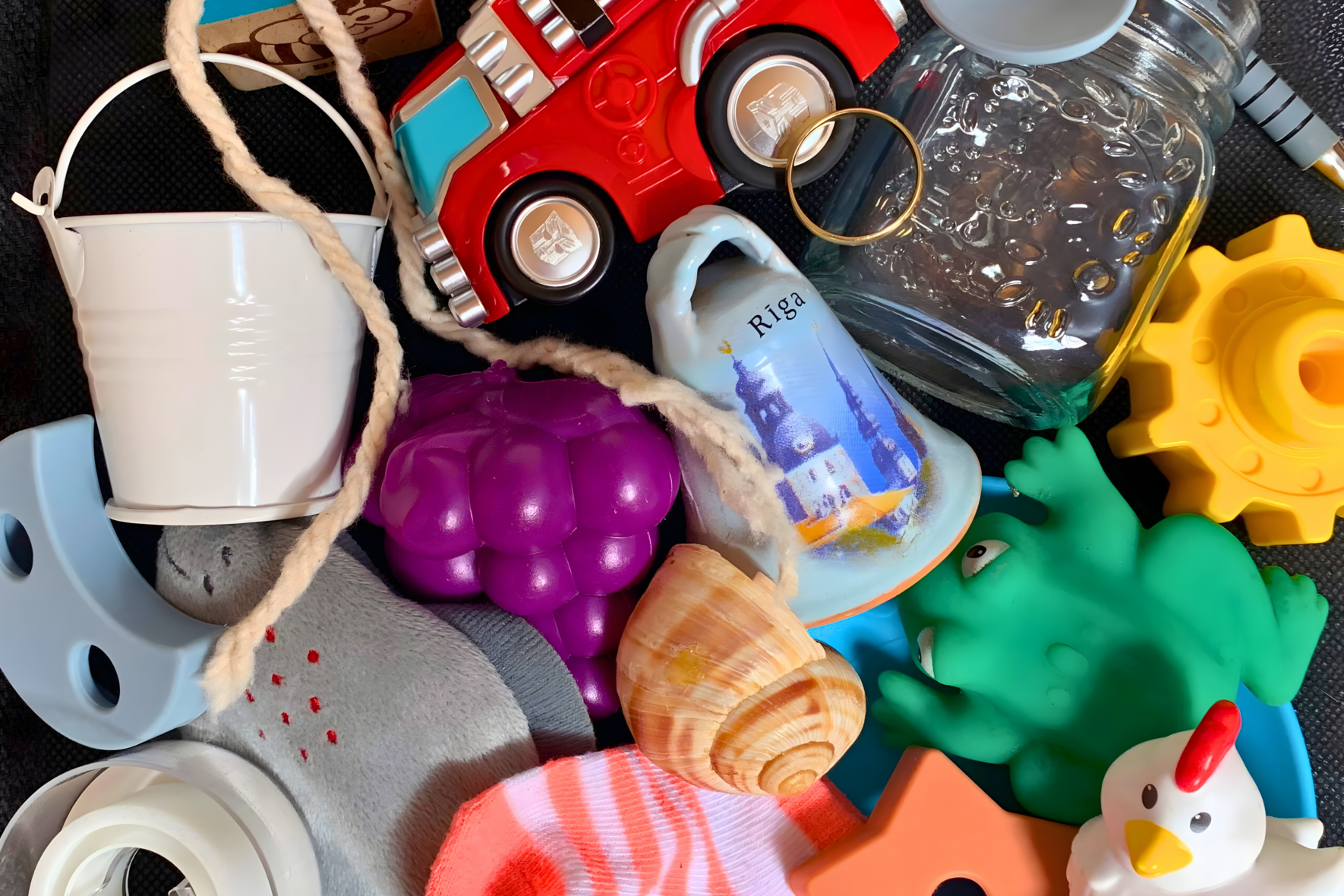
I started by gathering a large basket and filling it with small objects from their toys, such as puzzles, crafting supplies and sensory play items. The beauty of this activity is that it is a great way to repurpose small leftover pieces or from incomplete sets.
From here, I tried to think up rhyming pairs from what I had on hand. Some items had different possible names that could be a contender for a rhyme. Such as, is this a rope or a piece of string? A mug or a cup? Can the object’s colour or shape be used to rhyme with another object in the basket? Being flexible with naming allows for many more rhyming possibilities.
Rhyming Objects in Our Basket
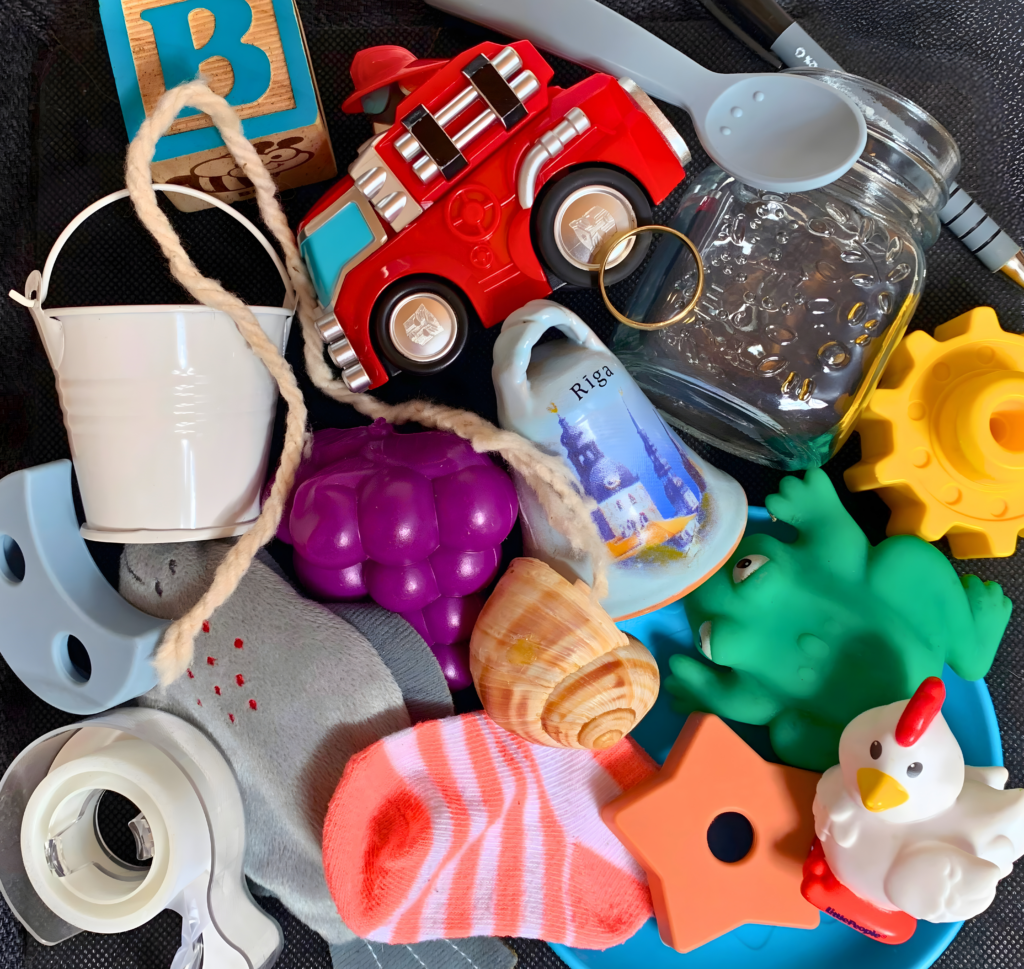
In our basket, for instance, you’ll find these rhyming objects:
Car – Star – Jar
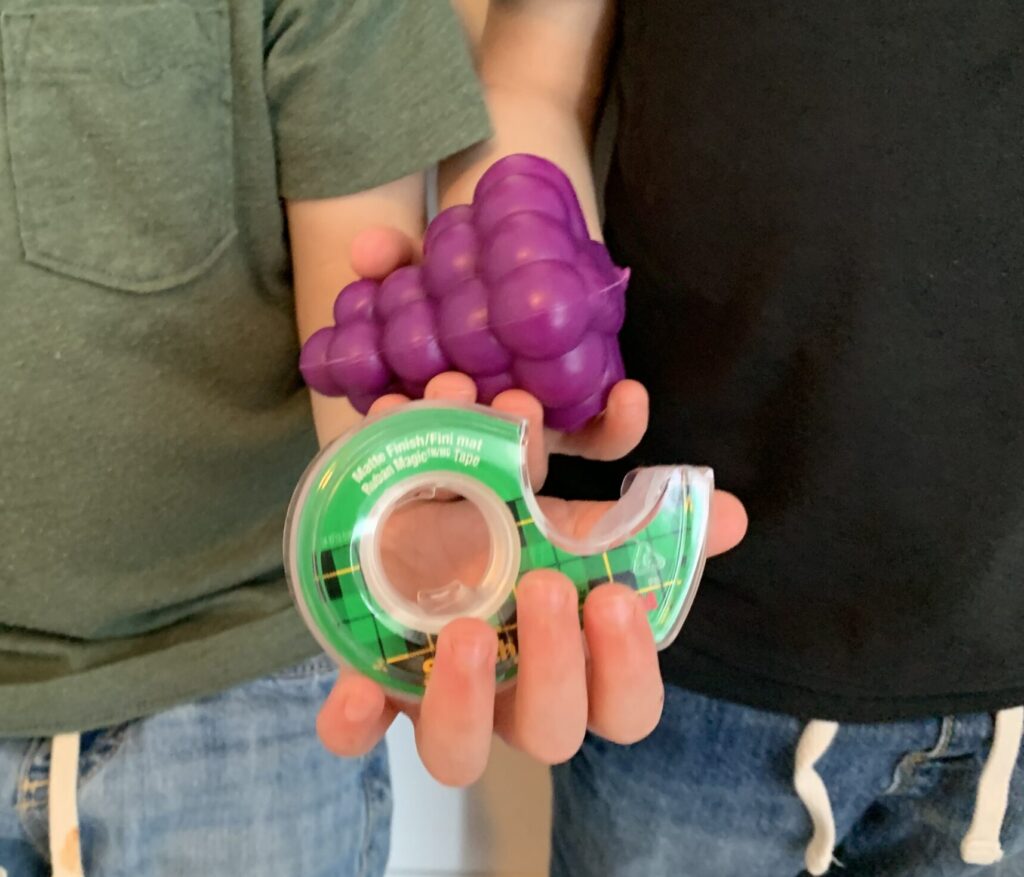
Grape – Tape
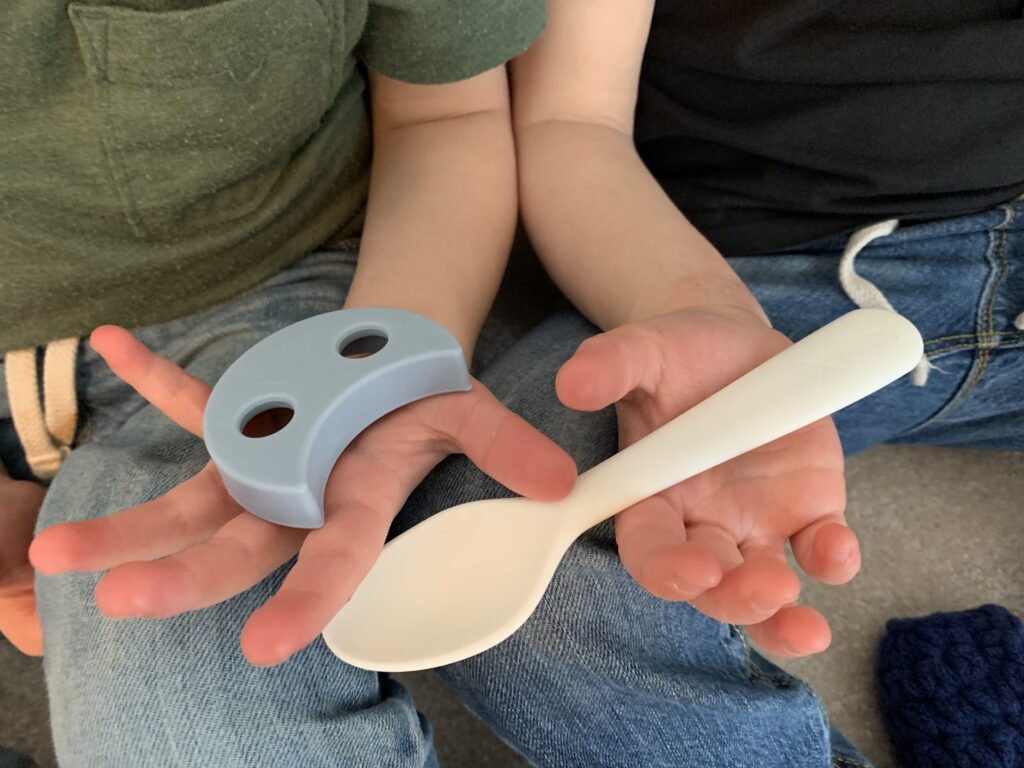
Moon – Spoon
Pen – Hen
Ring – String
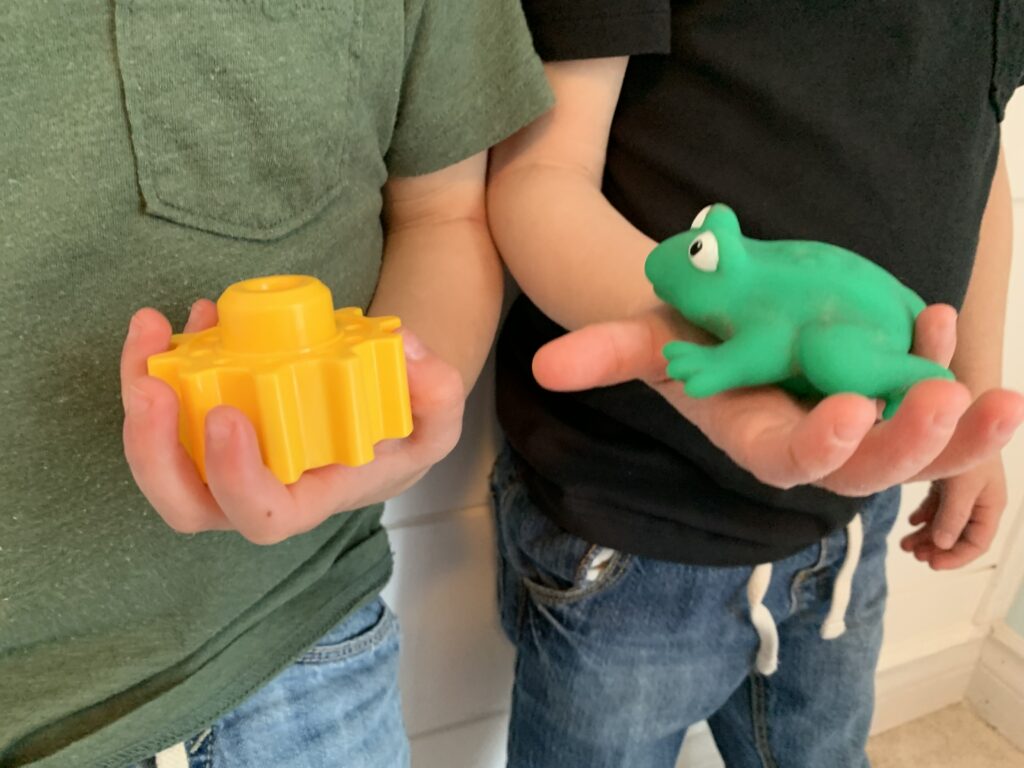
Cog – Frog
Pail – Snail
Shell – Bell
Snail – Pail
Dish – Fish
Sock is a great rhyming word! Everyone has a sock at home, and it pairs easily with many objects.
Sock – Block – Clock – Rock – Chalk – Lock
As a result, children begin to see how one word can rhyme with many others, expanding their awareness of sound patterns.
How To Play The Rhyming Game
The game is simple. First, one child picks an object from the basket and said its name out loud. It’s important to clearly emphasize the main sounds to highlight a potential rhyme.
Slowing down and repeating the words helped tune little ears into the rhyme:
“s-o-ck……. b-l-o-ck.”
“sh-e-ll…… b-e-ll.”
Sometimes objects might might have many possible names. For instance, is this a bunny or a rabbit? House or home? Is there more about the object we can rhyme? Such as, we rhyming the shape or the design? Next, we searched through the basket to find another object that rhymes. It’s important not to turn this game into a quizzing activity, but rather one of gentle exploration of sounds and tuning into those that sound similar with others.
Once the rhyming objects are matched, they can be paired off to the side, or mixed back in for further matching opportunities. This also increases the difficulty, so best for older children or after the rhymes are familiar from a few cycles.
Expanding the Rhyming Basket Options at the Thrift Store
Next, I took a photo of the rhyming basket at home before my next trip to the thrift store. You can also write a list. Having that photo on my phone made it much easier to shop, as I held up the image next to objects seeing what variations would work. A tiny figurine house could be used as a home to rhyme with comb.
Often at thrift stores, you’ll find random assortments of small toys bundled together in a single bag for one “take it all” price. For example, bags filled with pieces missing from sets or items that are too small or too tricky to sell individually. Which makes them perfect for a rhyming basket!
By referencing the photo on my phone, I can quickly scan the bundled bags to see if any of the items would make good rhyming additions. Even if only a few items in the bag work for our purposes, it can still be worthwhile. After all, any pieces we don’t use can simply be donated back.
This approach keeps the activity affordable and sustainable. Thrift store visits turn into a bit of a treasure hunt for learning materials. And for only a few dollars at that.
Find and Rhyme Around The House
When the items in the basket are exhausted, you can extend the hunt to the rest of the home! This can include objects far too big to have been included in the basket. Think bread and bed, rug and bug, (a pet) dog and frog sock and clock. After that, every time you’re child encounters them around the house they will be reminded of the rhyme. “Mommy, sock and clock. That rhymes”.
This extension keeps the activity fresh. Children are encourages to actively think about sounds in language in their everyday environment. After that, rhyming and sound exploration becomes a natural, self-directed process. This is also wonderful for children with speech delays or difficulty properly pronouncing words. More repetition through play!
More Rhyming Ideas
You might try using a rhyming dictionary for more ideas. Rhyme Desk is a fantastic resource for building a rhyming basket, with family-friendly rhymes generated from your chosen word.
I also favour a family technique called “the alphabet way.” You simply pick a word, then go through each letter of the alphabet to build rhymes. For example: house → A-ouse, blouse, C-ouse, douse… and so on through mouse and spouse. Not all letters in the alphabet will produce a usable object. In fact, many will be just gibberish. But its a place to start, and brings up creative ideas you might not have stumbled upon otherwise.
Here are some more rhyming ideas with small objects or toys you can likely have at home.
Red – Head – Bread
Hat – Cat – Bat – Rat
Ball – Doll
Home – Comb
Book – Hook
Key – Bee
Drum – Gum
Egg – Leg
Stick – Brick (lego)– Chick
Bug – (bath)Plug – Mug
Snake – Cake
Box – Fox
Duck –Truck
Train –Chain
Spoon – Balloon (deflated)
Chair – Bear
Learning to Through Sound in Montessori
In Montessori, learning to read and write is not about memorizing words or flipping through flashcards. In fact, Maria Montessori discouraged quizzing children. Instead, she encouraged attractive, accessible presentation of materials that naturally invited hands-on, sensory-based experiences. A Rhyming Basket game suits this approach of learning through hands-on play as a foundational element of early literacy skills, introducing children to the sounds within words in a playful and meaningful way.
In Montessori, children are introduced to sounds long before they learn the names of letters. As children trace sandpaper letters, they connect each symbol with its corresponding sound through touch and movement. By focusing on letter sounds rather than letter names, children develop a smoother transition into reading and writing. For example, when encountering simple words like “bug,” “hen,” or “car,” children can sound them out naturally without needing to think about the letter names first. This approach makes reading feel more intuitive and less mechanical.
Rhyming activities further deepen this understanding by reinforcing sound recognition in a fun and engaging way. Over time, these foundational skills support the child’s growing confidence and ability in both reading and writing. This begins with sound games, where an adult guides the child in isolating and recognizing the individual sounds that make up words. The Rhyming Basket game builds on this idea by helping children hear similarities in word endings, strengthening their ability to identify patterns in language.