What Is A Montessori Home?
Wanting to explore the concept of a Montessori home can be a very attractive, but also overwhelming prospect for parents. If you have social media, you likely have a passing introduction to floor beds, carefully staged toy shelves, and the promise of peace and order in 5 easy steps.
You may be thinking, sure that MIGHT be achievable with one child, how on earth do I make this work with Twins? Triplets? Multiple small children? When I was pregnant with my twin boys, I found nothing on the complexities of raising twins with Montessori in mind.
Hopefully this page provides inspiration and guidance to begin transitioning your space to being more child-focused with multiples in mind……
The Prepared Space
Part of preparing the environment is creating a space that allows free, but safe movement for your children to explore and learn in. Get low to the floor, on your hands and knees if mobility permits, and try to see the space from your toddler’s perspective. You may notice just how much you have to crane your neck to see things stored up high. You may even find the space rather dull from this perspective.
Our goal is to bring functionality, accessibility and some beauty into the lower spaces. We also have to be mindful of any safety concerns as toddlers (especially toddler twins in my experience) will enthusiastically explore everything.
How to Prepare a Montessori-Inspired Foyer
An entryway is a critical point of activity. Often, there are lots of bodies squeezed into a tight space, performing many movements, usually under the pressure of time. The space needs to remain highly functional. Everything is within reach, and the space remains uncluttered and easy to navigate.
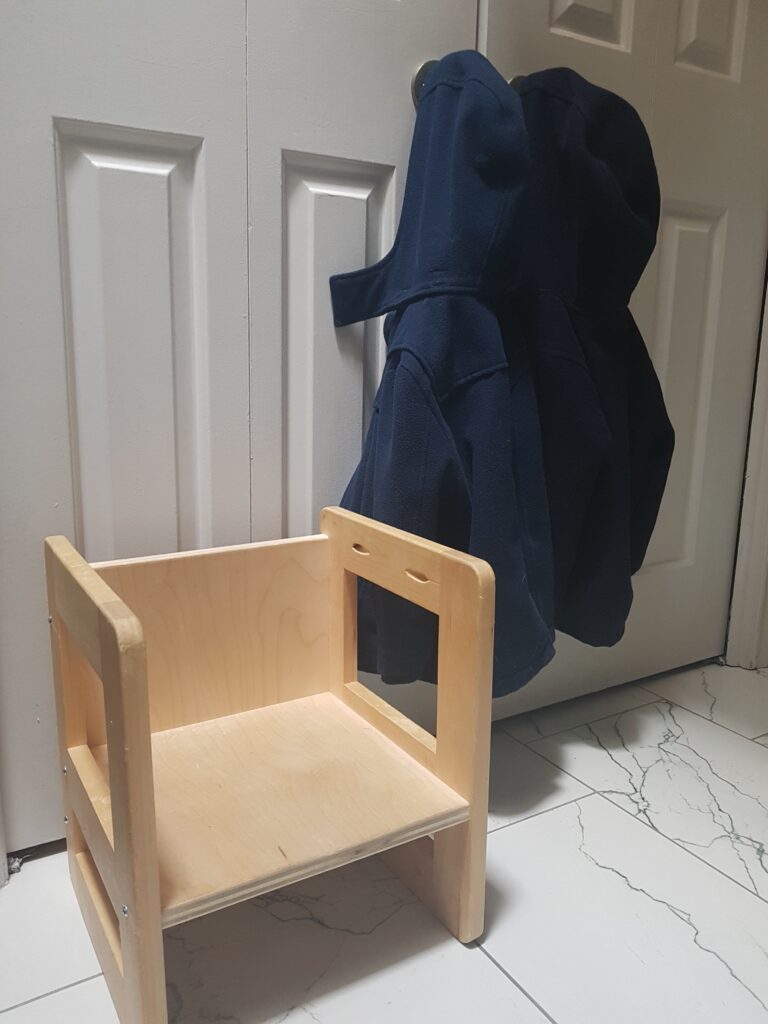
I’ve seen many beautiful built-in child cubbies that, given enough space, would be wonderful. We mostly worked with the natural elements already in our space. The closet door handles are where our children retrieve and hang their jackets. In winter, a woven basket stores snowsuits.
Because we don’t typically wear socks around the house, they’re kept in the foyer table. The twins know that putting on their socks is the first step to heading out the door.
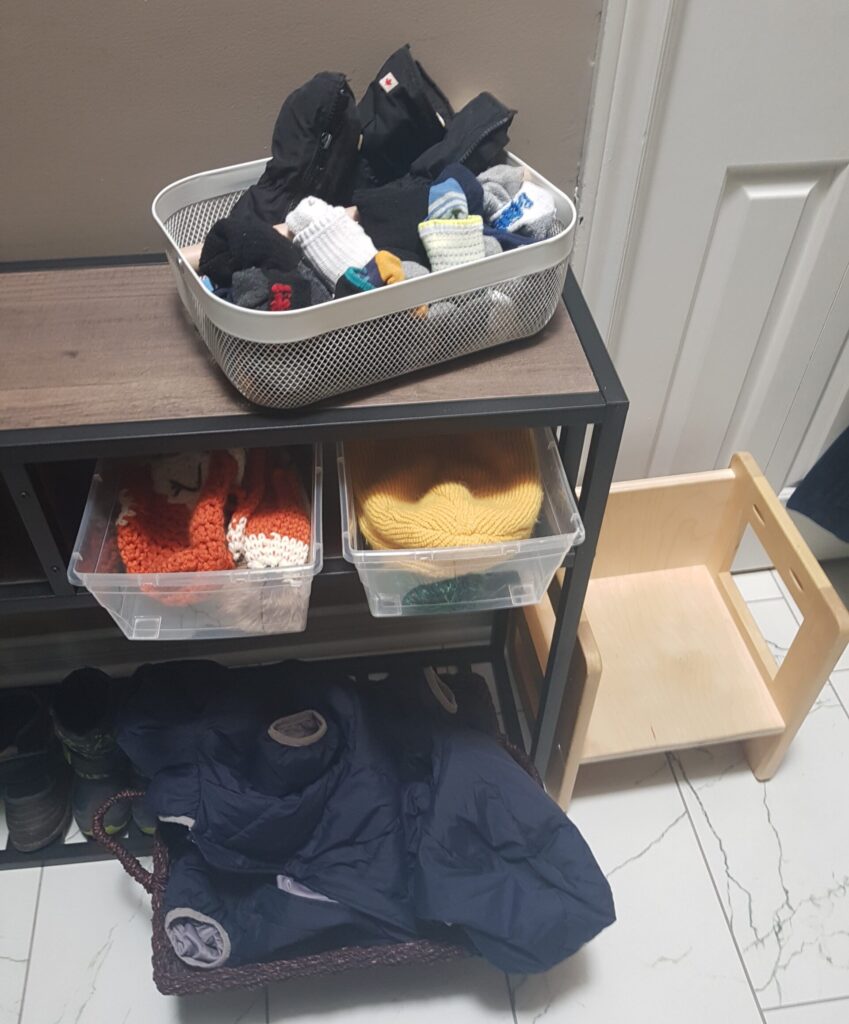
Hats, mitts, gloves, and sunscreen are always at the ready. Our twins have their own designated hats, jackets, and shoes to call their own. Sometimes they trade, but only if both parties agree. If not, they learn to respect the other’s agency. This gives them a sense of ownership, rather than every item being communal and subject to “taking turns.”
A clock is very helpful in the foyer. As children begin learning to tell time, they start by noticing where the hands are positioned. They may start connecting the hand positions, or numbers on a digital clock, to familiar parts of their day. They may begin to understand this means we are leaving for school, going to activities, or picking up an older sibling. Gradually, this strengthens their understanding of time.
Montessori Bedrooms for Twins
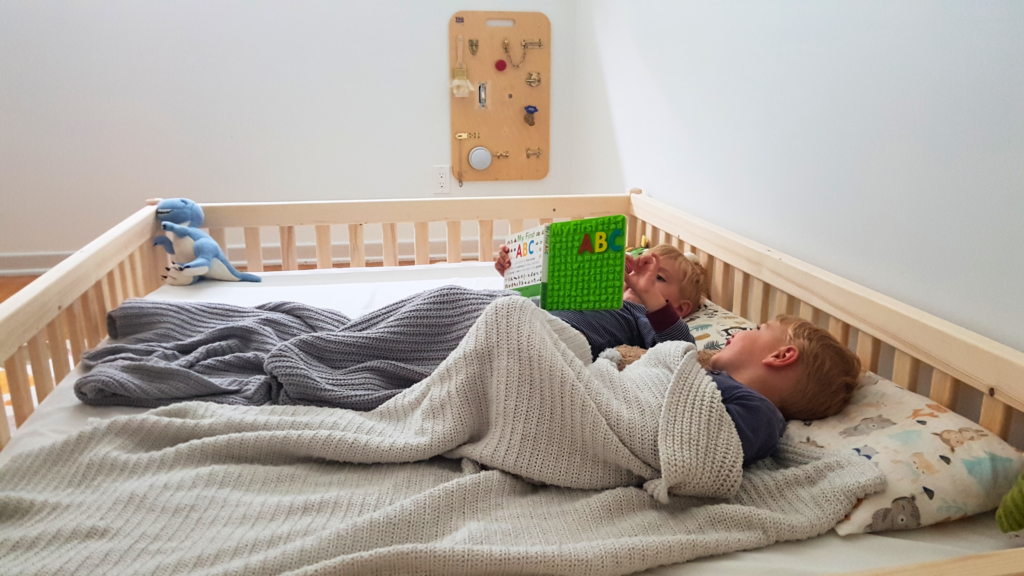
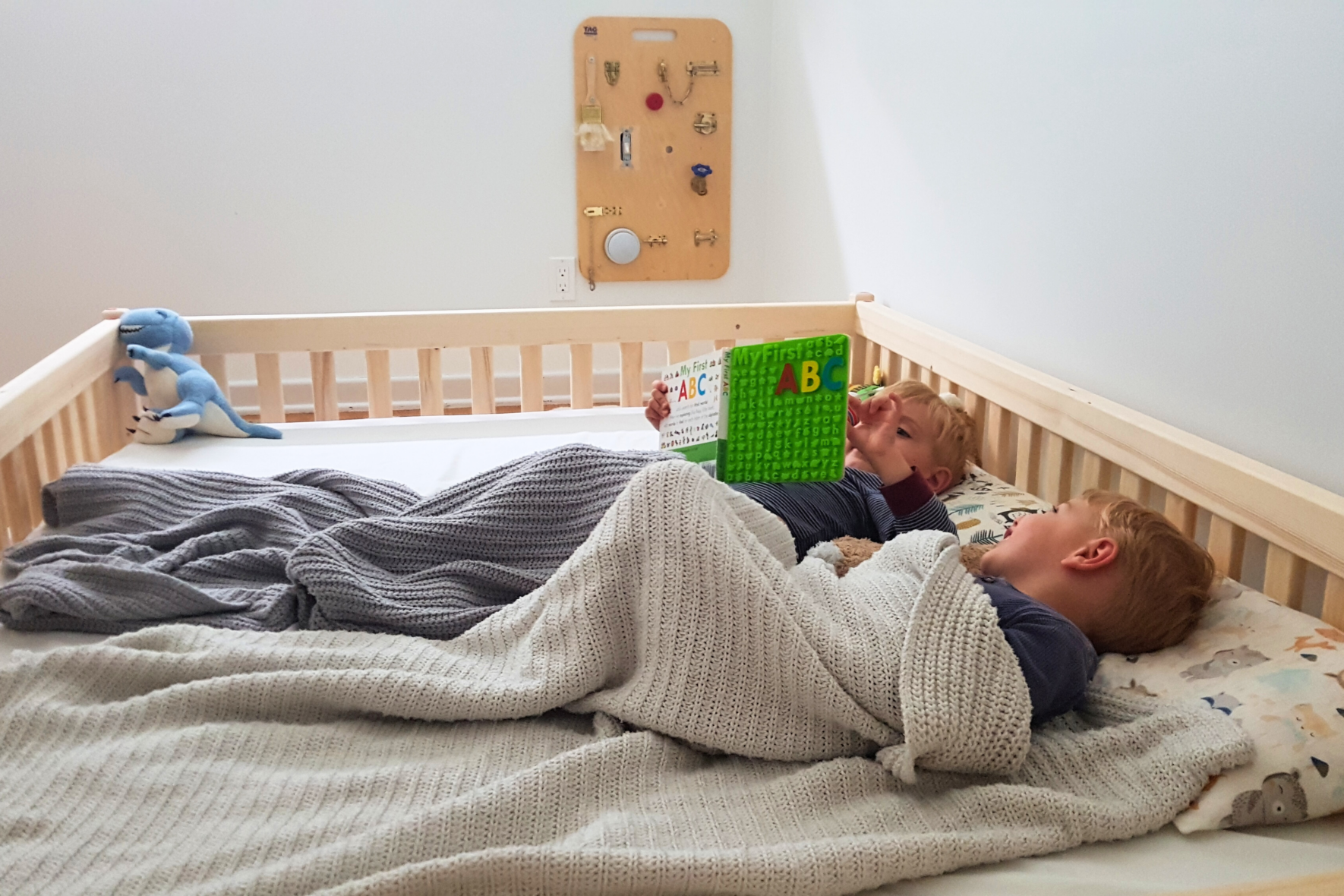
A Montessori bedroom for twins is about much more than just placing a mattress (or two) on the floor. We’ve thoughtfully prepared this space to be calming, and foster a sense of independence, and of belonging.
The room should first be uncluttered and minimally stimulating. Montessori aligned bedrooms typically favour neutral or muted colours, and natural materials like wood frames and woven baskets. This is because too much stimulation, either from objects in the room or colours on the wall, can disrupt a child’s natural sleeping rhythm.
A Montessori floor bed encourages freedom of movement and autonomy. Twins can independently get in and out of bed, play or read before sleep, and wake gradually without relying on adults. For twins, deciding between one shared bed or two separate beds will depend on their personalities and the space you’re working with. We selected a shared, larger floor bed for comfort and closeness.
Safety is essential, because children can freely move around outside their beds. The entire room must be carefully prepared. Anchored furniture, covered outlets, and prioritize minimal clutter. With everything in reach being accessible, it must be safe absent adult supervision.
The bedroom can also include:
- A toddler-friendly reading area with forward-facing books.
- A capsule wardrobe that encourages independent dressing with limited, functional clothing choices.
- A small workspace that supports concentration and choice.
- Personal elements like a family growth chart, artwork, and family photos all displayed at child eye level.
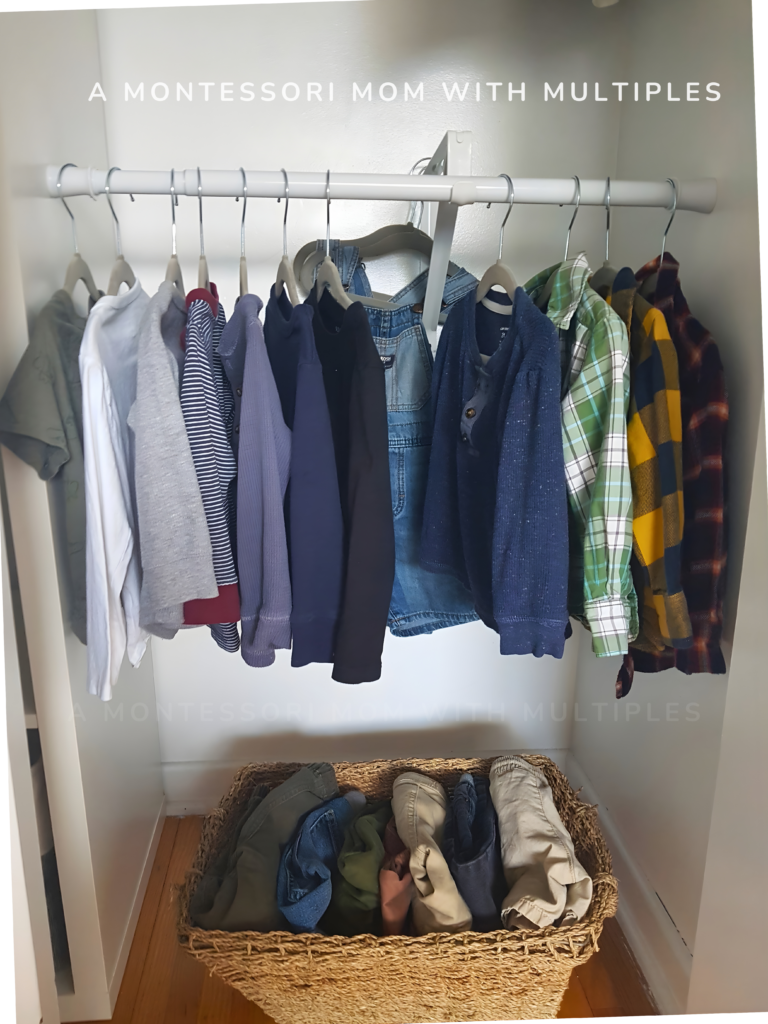
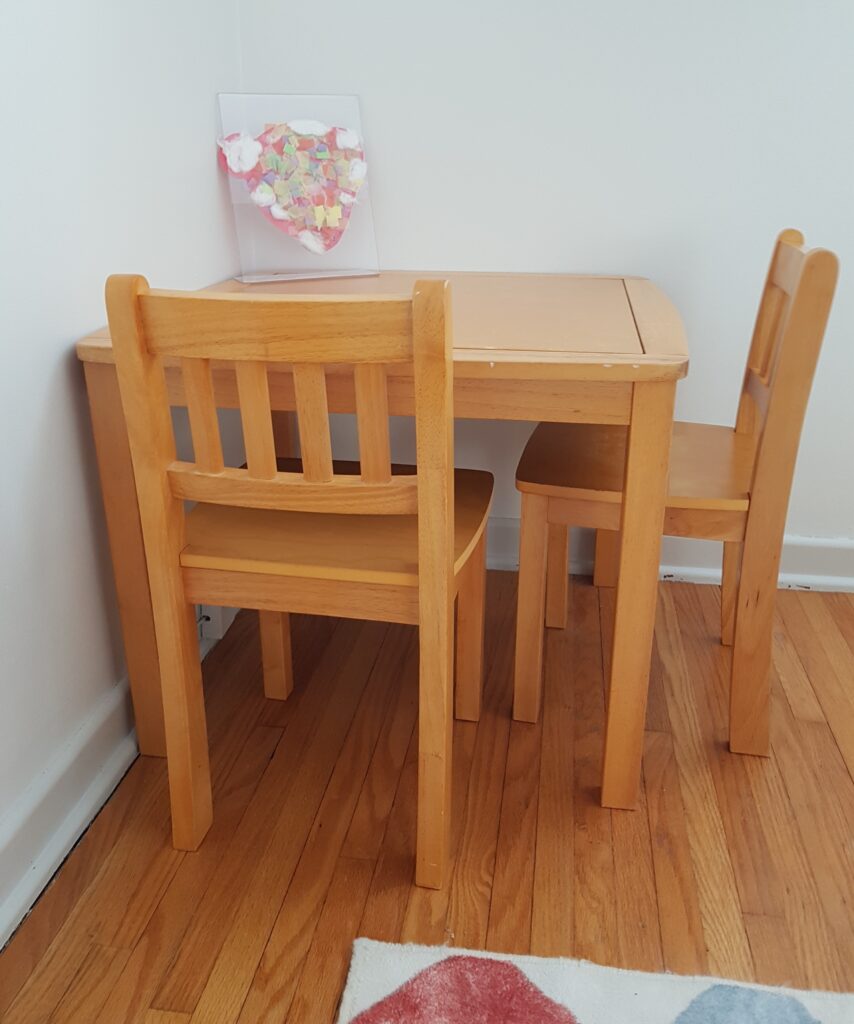
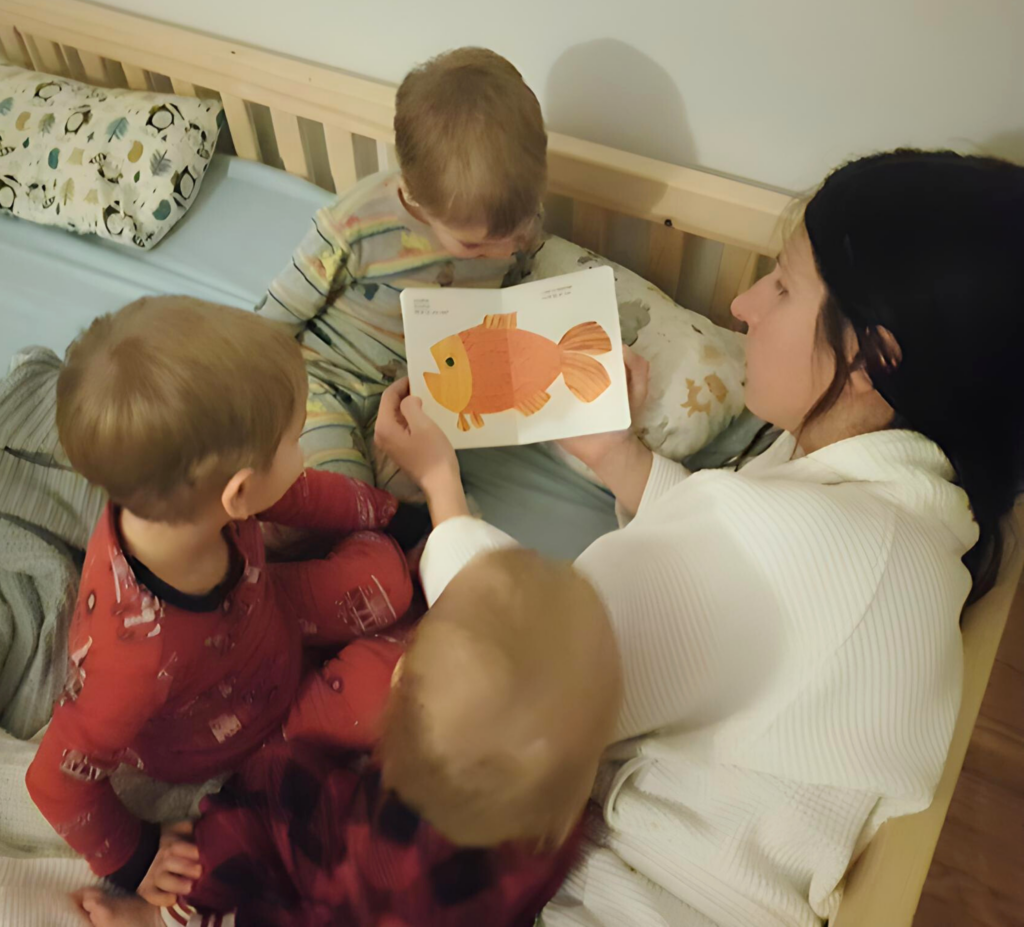
You can read the full blog post here how I created a Montessori Bedroom for Twins.
Montessori Bathroom for Twins and Toddlers
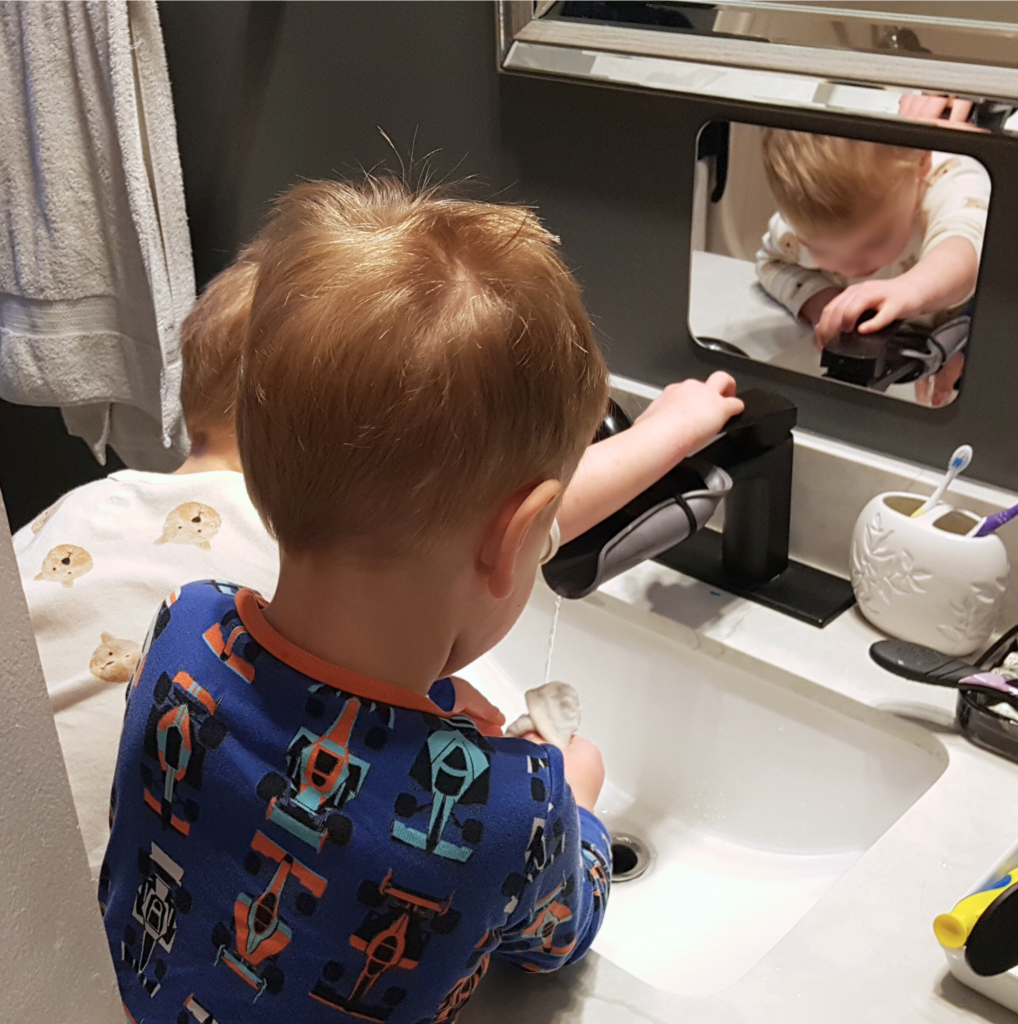
Our twin’s desire for self toileting came at us much earlier than expected. A Montessori bathroom is a thoughtfully prepared, child-accessible space that supports independence in daily self-care routines such as handwashing, tooth brushing, toileting, and bathing. Rather than adding expensive child-sized fixtures, the focus is on adapting what you already have by making those fixatures accessible.
The setup typically includes three key areas:
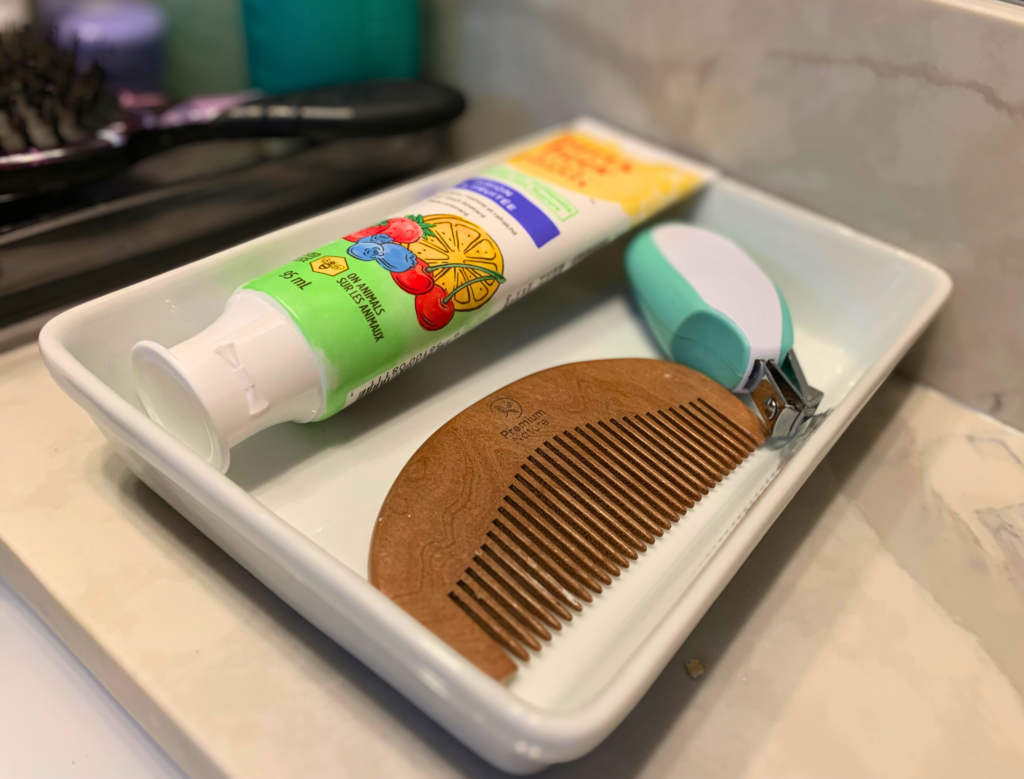
- Hygiene Station – A place for child to wash hands, brush their teeth and fix their appearance
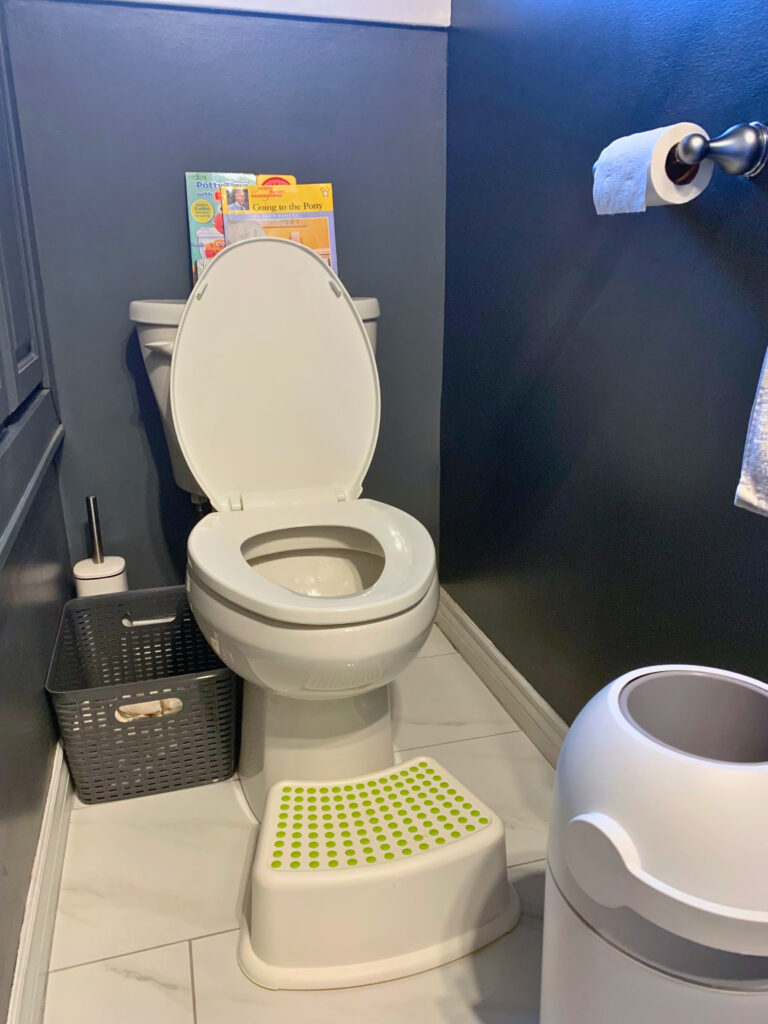
- Toileting Station – A place for toileting that allows independent access to a toilet, while having systems in place for accidents and learning free from shame.
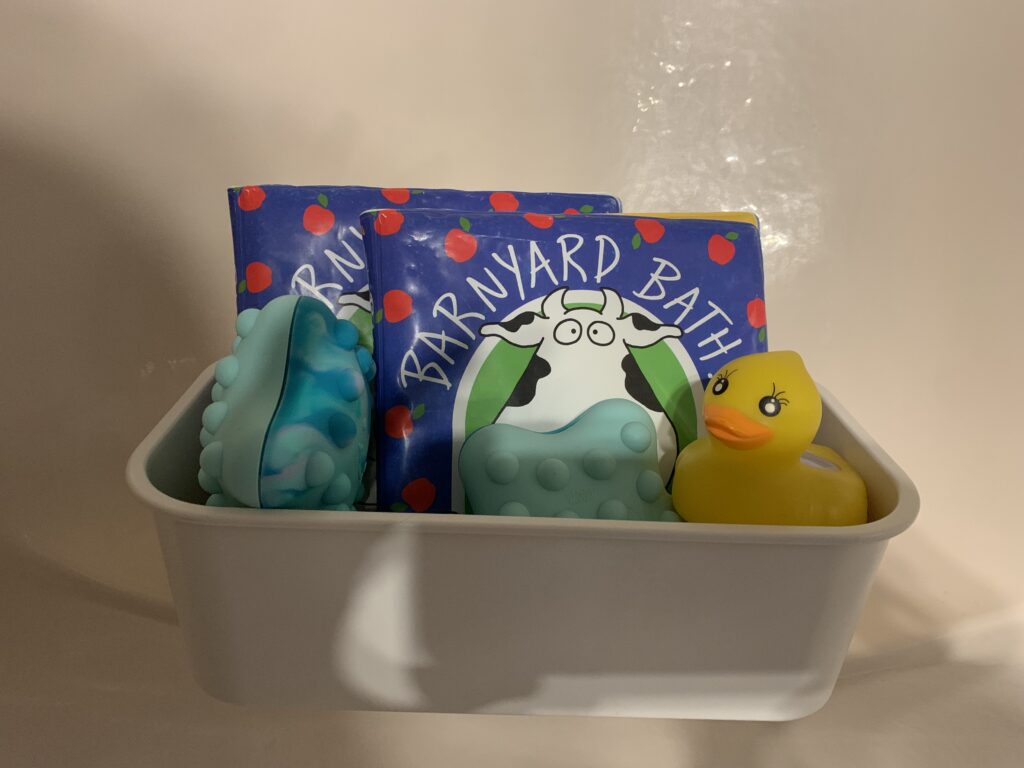
- Bathing Station – A place for independent washing, play, relaxation and body awareness while supervised by a adult.
A sturdy step stool, a faucet extender, soap they could actually reach, a little mirror at their height easily transforms an existing skin into a place for independent self care. I quickly saw how much time and effort this freed up when they were given the tools to participate in their own self care.
With twins, we found companionship quickly devolved into distraction. We try to emphasis one at a time in the bathroom.
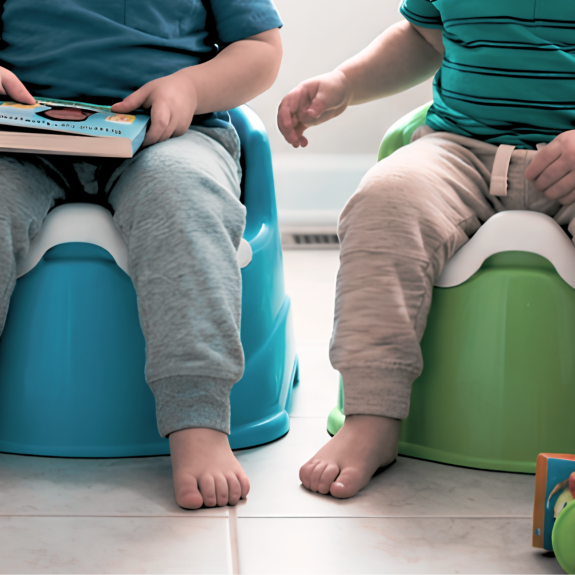
Toileting was honestly the biggest surprise for me. I assumed they’d want little potties, but mine were way more interested in the real toilet. We kept a small bin nearby for pull-ups and a little laundry basket for accidents.
Bath time features fewer toys and letting them wash their own bodies under supervision. When clean, they dry and hang their own towels, before putting on their little robes. Of course, we supervise bath time. Independence doesn’t mean absence.
You can read the full blog post here how I created a Montessori Bathroom for Twins and what Toilet Learning really looks like with Twins.
Montessori In The Garden
A Montessori sensory garden is a safe, child-friendly space where children develop practical life skills through hands-on interaction with nature. As the garden changes with the seasons, children learn responsibility, patience and observation, by participating in the full cycle of tending a garden.
You can read the full blog post here how I created a Little Montessori Sensory Garden
What Makes It a Sensory Garden?
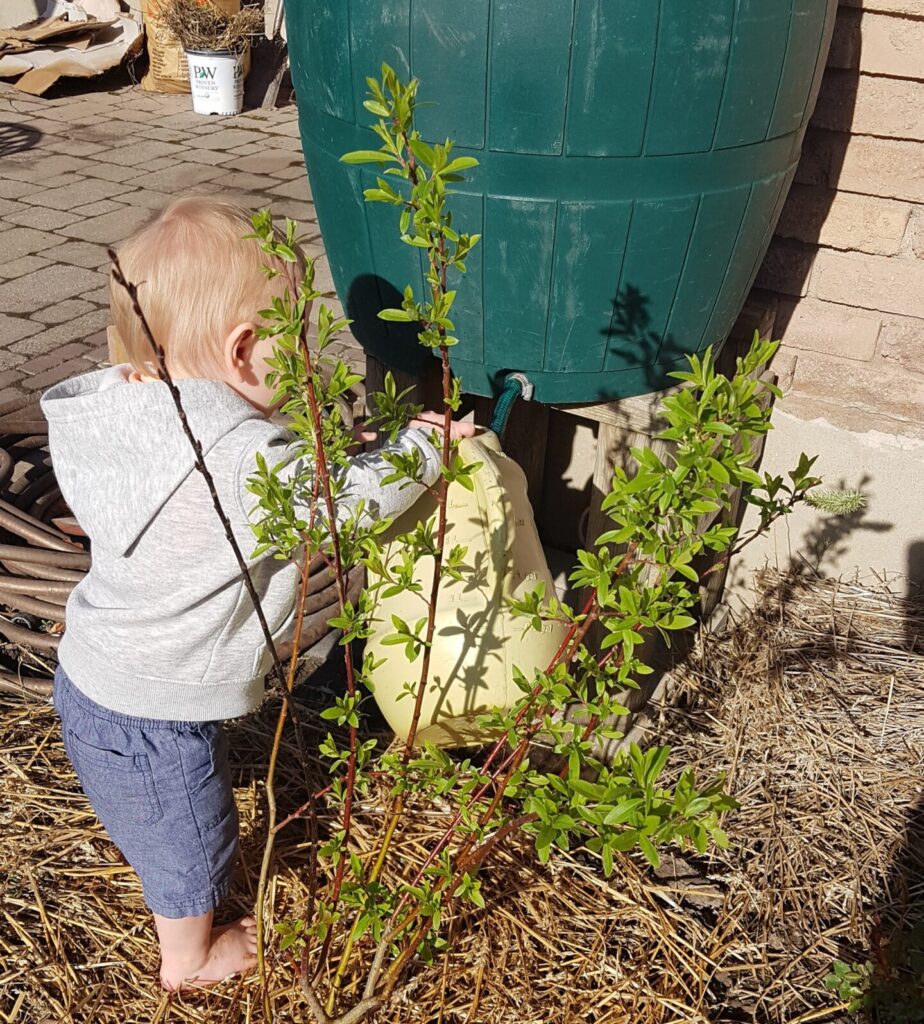
Our back garden is intentionally prepared so everything is safe to touch and taste, avoiding toxic plants and chemicals. Hardy plants are chosen to withstand handling. Edible or atleast non-toxic varieties ensure safe exploration. We inspire movement through meaningful work. Our twins carrying watering cans, digging, planting, and harvesting ready to eat fruits and vegetables. All strengthening fine and gross motor skills.
Involving your children in a Montessori garden
Ideally, the whole space should be open to your child to explore but that is not always practical. Create ‘yes’ spaces, like their own patch of dirt to dig, plant and weed. A small patio with potted plants is perfect! Build on this with simple Montessori-inspired activities. Littles can track plant growth with measuring sticks, or planting in clear containers to see root growth. Both will deepen their understand of how plants grow.
Originally I started by seedlings indoors each year. As indoor space got tight with twins, and then 2 under 3 years old Winter sowing in outdoor has been a low-cost, less daunting way to grow from seeds. Everything is kept out doors, germinating on natures time. Children can peak in and see how the pants are coming along whenever we play in the back yard.
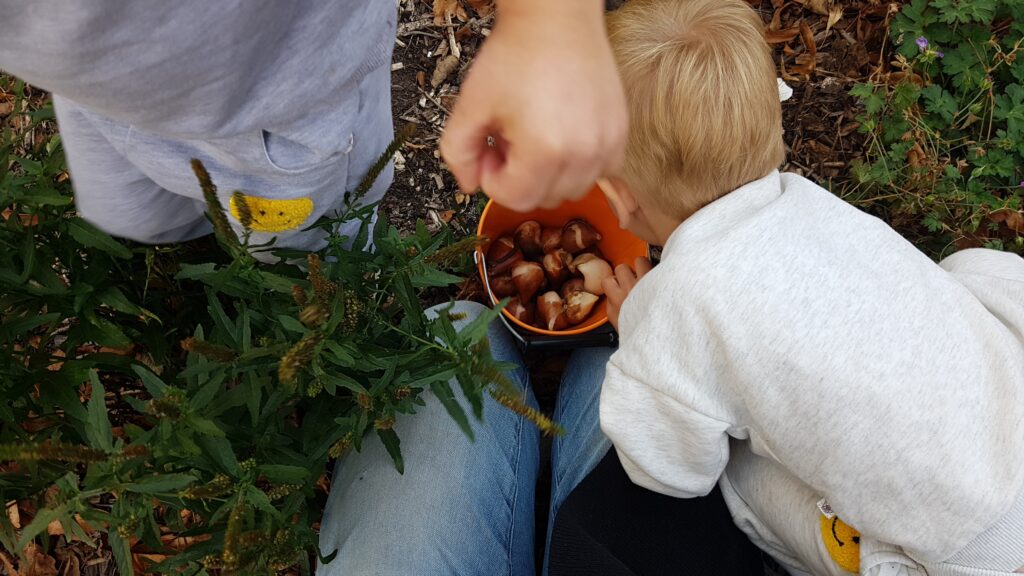
Planting bulbs is an excellent activity for small children. I recommend pre digging holes to the appropriate depth, then have you child join you plopping bulbs into the holes and covering the hole with earth. Keep going till you run out of bulbs.
Try to find child sized tools, like small watering cans, gardening gloves, and buckets. Shovels and rakes, ideally should be made from quality materials that function more as tools than toys. Try them out yourself first, and see if your child can do real, purposeful work with those in hand. Although don’t be surprised if they still gravitate to “mommy’s” tools. Overall, a Montessori home sensory garden should nurture a lifelong connection to nature through meaningful, real-world experience.
Montessori In The Kitchen And Family Meal Time
Montessori at the Kitchen Counter
Integrating my children into the kitchen was honestly one of the most challenging parts of our Montessori home rhythm. Our kitchen is very small for a family of five, and our meals are fairly simple, so space and efficiency really matter. I had to rethink the environment before I could expect independence from them. I decluttered all the countertops. Cupboards were decluttered, and made safe of hazardous tools. Lots of unnecessary junk donated. Then I made sure everything they needed was within reach and easy to find.
Because our kitchen is so small, we use a dining room chair or a simple stool instead of a bulky toddler tower. Towers are great for the Montessori home, but space gets tight with twins.
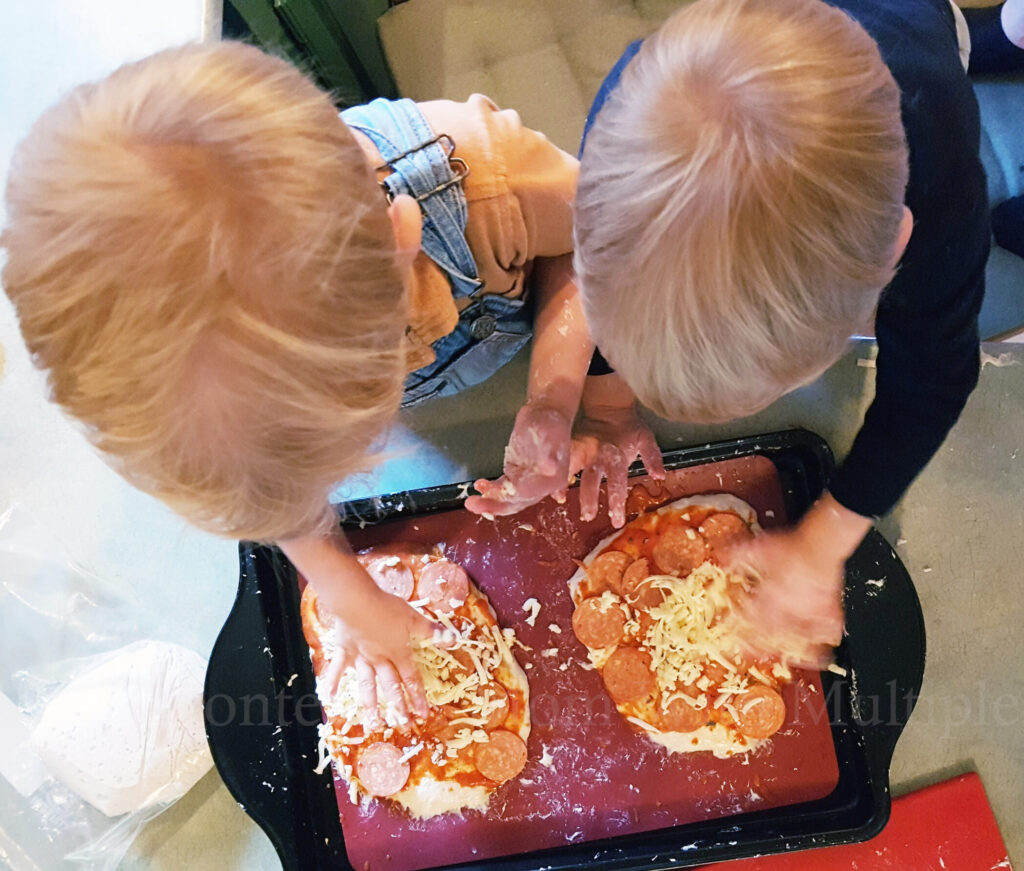
I put a lot of thought into what I’m going to cook with the boys. You have to go into it expecting that there will be mess, there will be waste, and the recipe might not turn out as well as it does when you cook alone. That’s normal—and it’s actually a good thing. Making mistakes is essential for children to learn and grow.
With twins, you may already be stretched thin on messes and mistakes. To make it smoother, read the recipe well in advance and prep whatever you can ahead of time. Then focus on letting your children contribute in small, manageable ways. Start by having them grate the cheese or stir the batter. Build their confidence through simple tasks thatthat contribute to the larger meal.
Empowering Little Hands at Mealtime
For breakfast and snack times, they collect what they need from the fridge and cupboards. I transfer milk and cereal into smaller containers to support independent pouring. This makes pouring easier for little hands, allowing them to serve themselves.
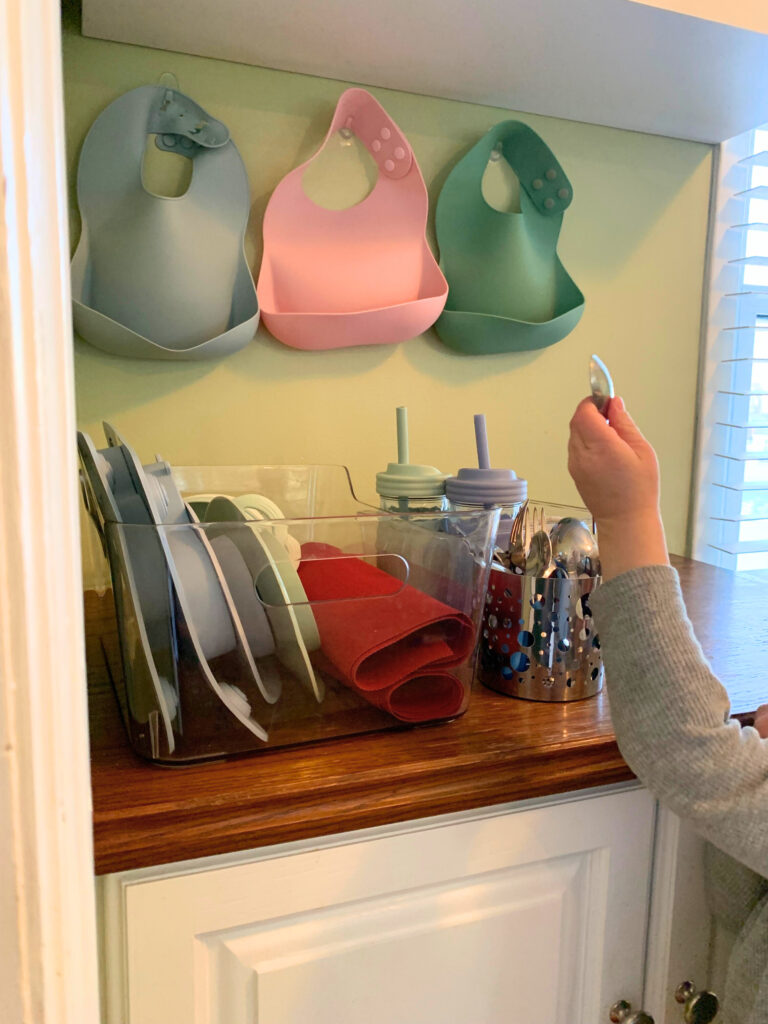
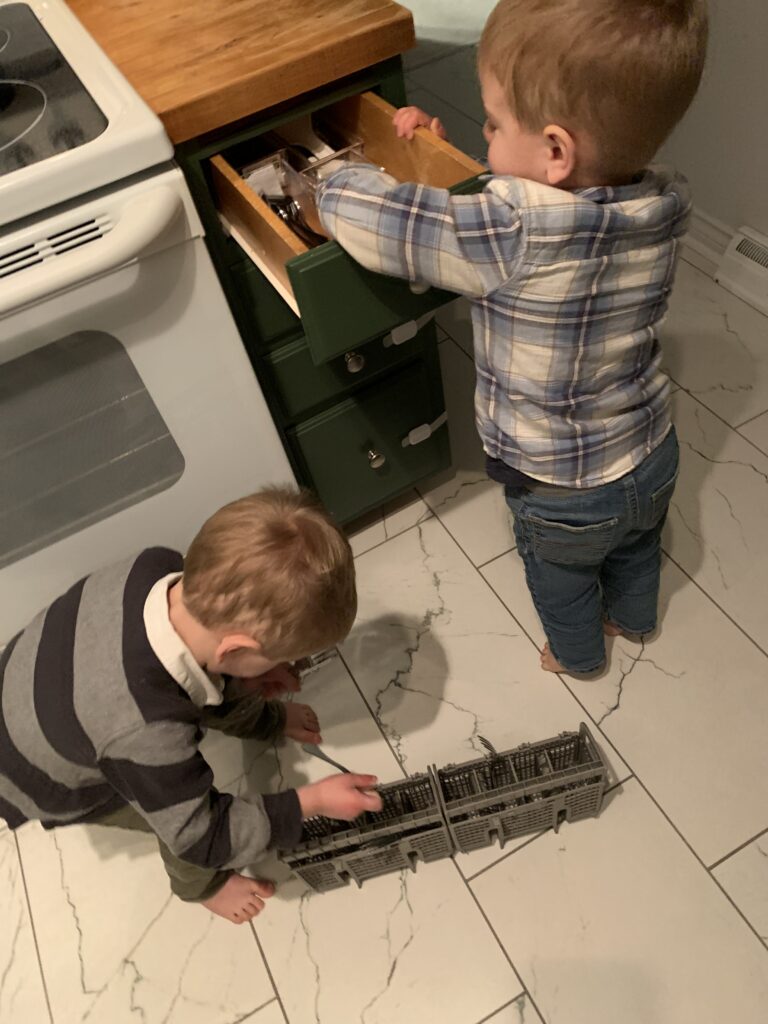
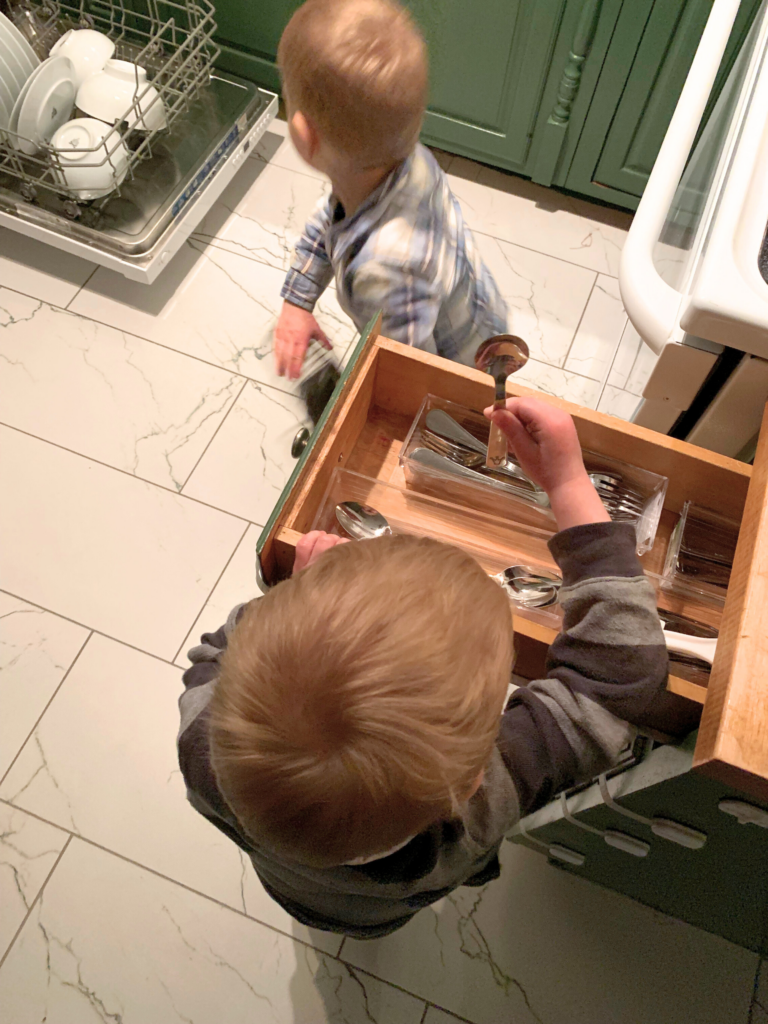
We keep all bibs, cutlery, bowls, and cups on a low counter. Here, they can access everything themselves. Any low drawer in your kitchen would work great for this. They use real metal cutlery, just smaller sized for little hands and mouths. Plastic or silicone is so tricky for spearing meat and veggies, and will only lead to frustrations. I found lots of inexpensive options at the thrift store. Ideally, you want to replicate the adult experience as much as possible with real metal cutlery, glasses made of glass and ceramic dinnerware.
The boys help set the table, clear their dishes, and place them in the sink after each meal. Peels and kitchen scraps go straight into the compost container on the counter. We also have little clothes (hidden in the picture) for them to wipe mouths or clean up spills while they eat. At mealtime, they sit at the family table rather than at separate toddler furniture. Keeping them integrated into the shared space, instead of segregated, has made a meaningful difference in how they participate and connect with the family.
Inviting Children Into The Care of The Home
Many children need little more than a rag and a spray bottle to feel invited into meaningful work. In a Montessori home, we call these Practical Life skills. Real, meaningful work that contribute to the function and care of the household. And yes, sometimes a child’s participating in cleaning actually contributes to more mess. With young twins in a Montessori home, it might even be law.
A hand held broom and dust pan, some cloths, a small spray bottle with water (or heavily diluted non-toxic cleaners) and a waste bin for disposal is all you need. When tools are proportionate to the child’s body, they can work with better control. Wouldn’t you find an oversize, novelty broom frustrating to handle? By providing children with the right tools, you empower them to take an active role in their environment. When children are trusted with real responsibility and real materials, they rise to meet the expectation.
Demonstrate the cleaning process together. Show them how to use the tools effectively, and let them observe your actions. This modeling is a key aspect of Montessori education, as children learn through imitation. Parallel cleaning also starts a rhythm that motivates all of us to clean a little bit more.
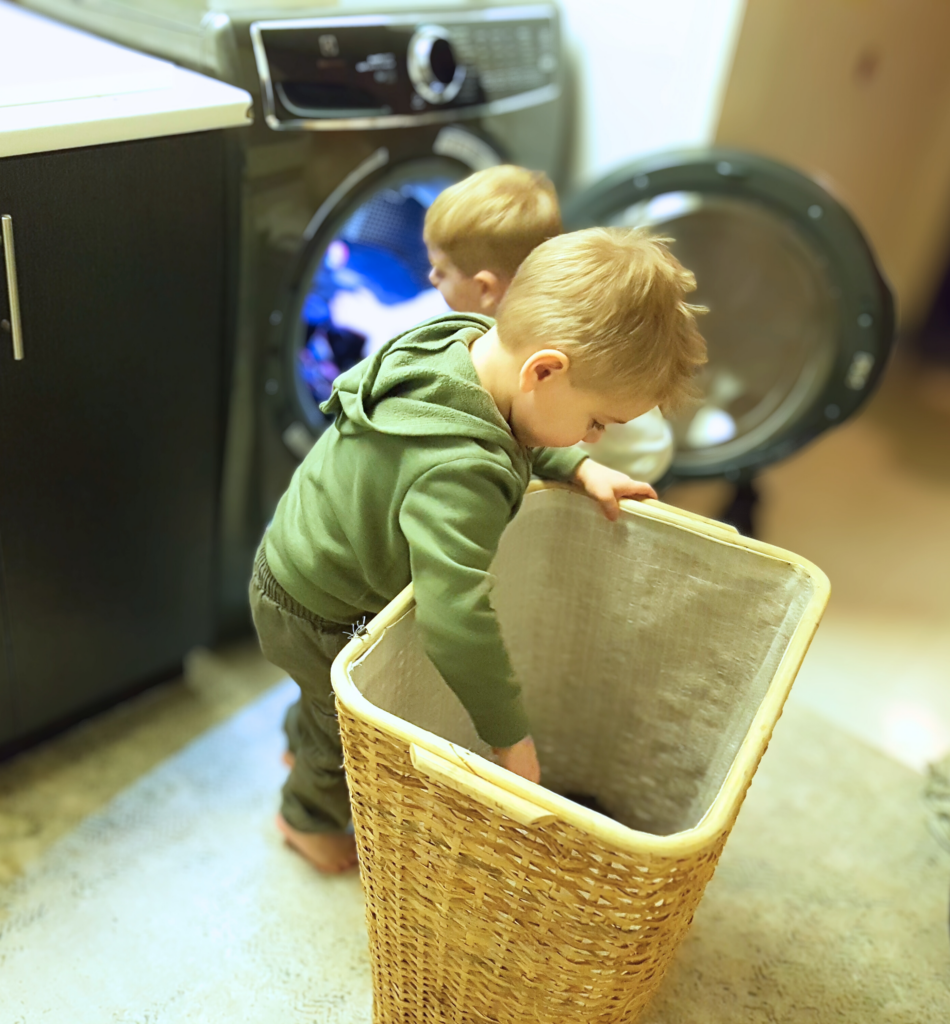
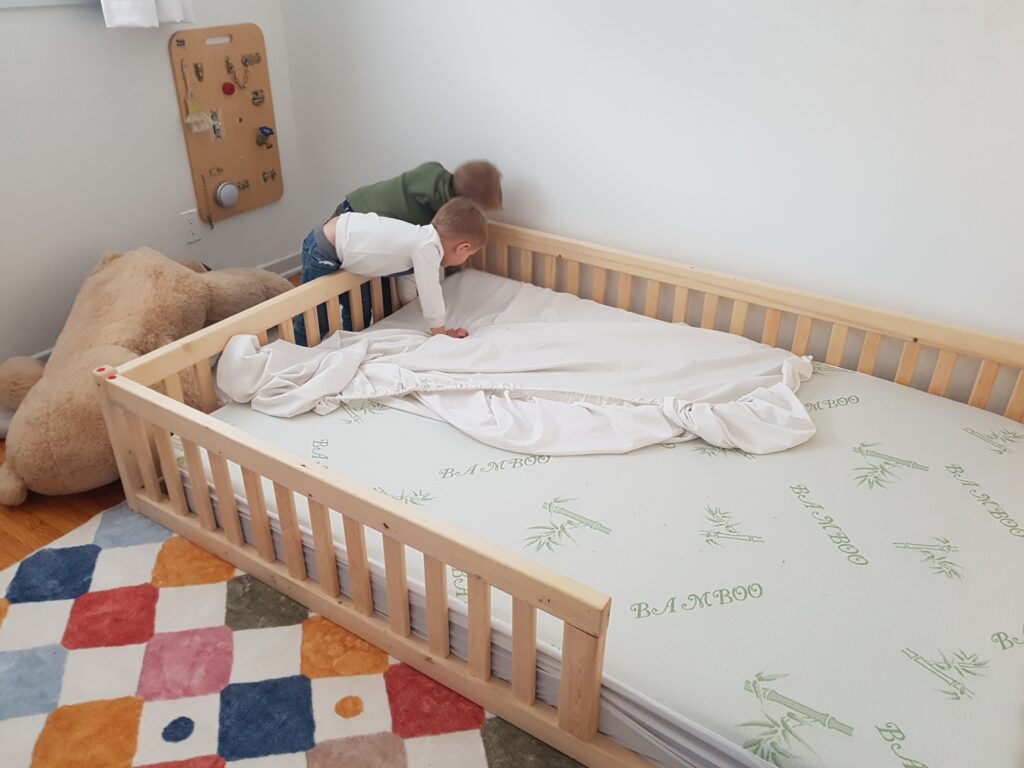
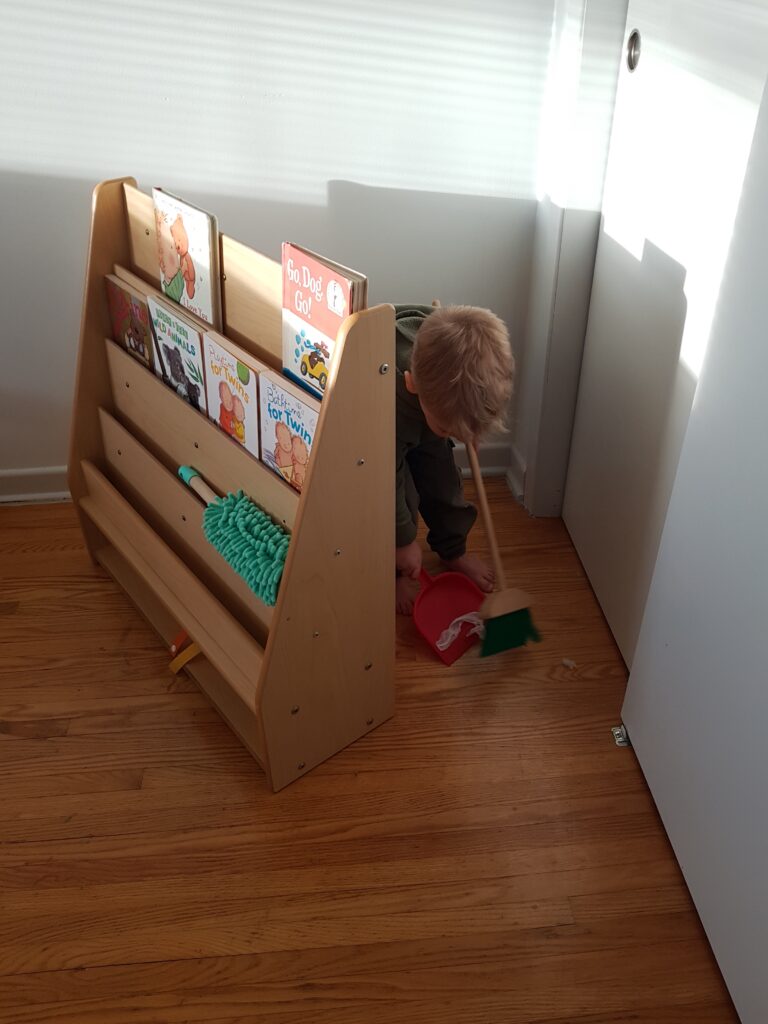
After completing their chores, take a moment to discuss how the space looks and feels now compared to before. Help them connect their actions and the resulting change in the environment. Our twins beam with pride and the satisfaction of contributing to the household. This is a Montessori home in action.
We store all their cleaning tools in a small closet so they know where to find them. I know some families leave them out all the time. Perhaps we’ll get there. Right now, the cleaning tools are too tempting as toys after all is cleaned.
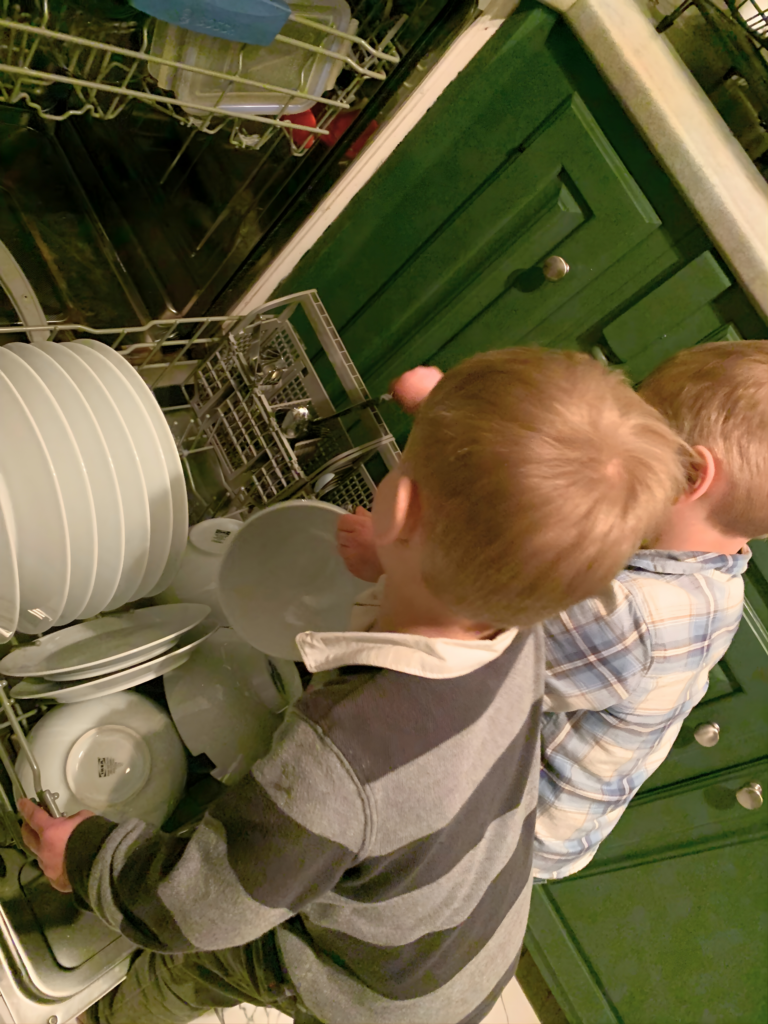
For twins I would absolutely suggest doubling up on all the tools. Two spray bottles, two cloths, two brooms. Thus supports parallel work rather than competition, and reinforces the idea that cleaning is a shared responsibility. You can also breakdown meaningful task. Instead of emptying the whole dishwasher, have their contribution be the utensils.
Reflecting On Our Journey
Creating a Montessori home for twins, and then 3 under 3 years has required a lot of trial and error. Patience is a given, but also letting go for what the space should be rather than what it needs to be. Having twins and multiples is a completely different experience than a home of singletons.
What works well with one family, isn’t going to work for another. Their are too many variables in space, culture, family numbers and the rhythm of your Montessori home. I promise you though, it’s worth the effort. From dressing to go outside, cleaning their own dishes, to tending to our garden. Simple acts that are building confidence, responsibility, and competencies for their life forward.
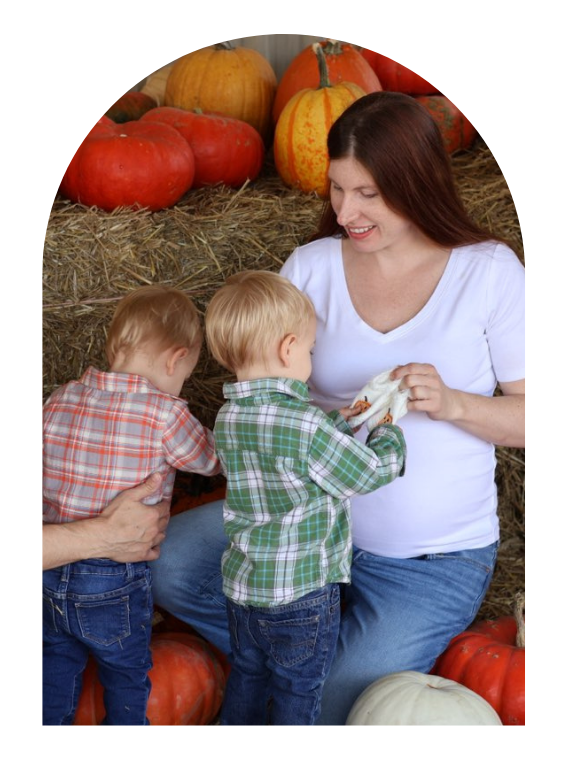
Hello, I’m Tabitha
A Montessori Mom of Multiples, sharing our family’s rhythm through a Montessori lens.
Here you’ll find honest reflections and practical ways to bring Montessori into your home while raising twins and multiple children.
This is a space built on respect and intention. I choose to keep my children’s faces private, share respectful content, and never use affiliate links. Everything I write is crafted through lived experience, careful observation, and a genuine desire to support other families.
A casual blog you can count on to be honestly written and lovingly informed on motherhood with multiples.