Creating a Child-Friendly Montessori Bathroom at Home
The Montessori bathroom is an important part of our Montessori home. Our twins had a natural independence streak (and their sister has followed suit), so will capitalized on their interest for independence by creating a bathroom they could use by themselves. For the most part. Designed with the child in mind, it supports independence of their own self-care needs.
Creating a Montessori bathroom for a child (or children in my case) was deceptively challenging. Despite the countless resources and inspirational photos online, there was much trial and error to find a system that worked for us, our children, and the space we were working with. At around 18 months old, my twins increasingly expressed a desire to independently use the washroom for self care and toiling. Preparing the environment to support this need was at first a change. We had to take into account something each twin’s individual preferences, the cramped space, and the rhythm of our family. Once mastered, our daily routines became so much smoother, and our children so very proud to be taking charge of their own care.
Montessori Bathroom Setup: Hygiene, Toileting, and Bathing
There are three basic stations we needed to address; the hygiene station, the toileting station, and the bathing station.
Simple Shifts Toward A Montessori Bathroom
A Montessori bathroom is a child-accessible space that allows children to manage their personal hygiene with minimal adult assistance. Practical life skills such as hand washing, tooth brushing, face washing, toileting, hair care, nose blowing and more. A Montessori bathroom does not need to be expensive or complicated. Simple adjustments can make a big difference.
There are so many adorable photos of child hygiene stations to be found online. Sometimes they are sold as Montessori sinks and others have cleverly converted play sinks/play kitchens to have running water for independent use. While beautiful and inspiring, these come with a heavy foot print. Most homes can not accommodate such a large feature. Our older, narrow bathroom certainly could not. Placing sink outside of the bathroom would be very impractical, and possibly less hygienic.
Creating a Montessori aligned space doesn’t require you to spend a lot. For us, creating a Montessori aligned bathroom was just about adapting what we already had by decluttering, simplifying, and making intentional choices based on the family needs and the reality of our shared space.
Montessori Hygiene Station: Easy Sink Access for Kids
Stool For Easy Sink Access
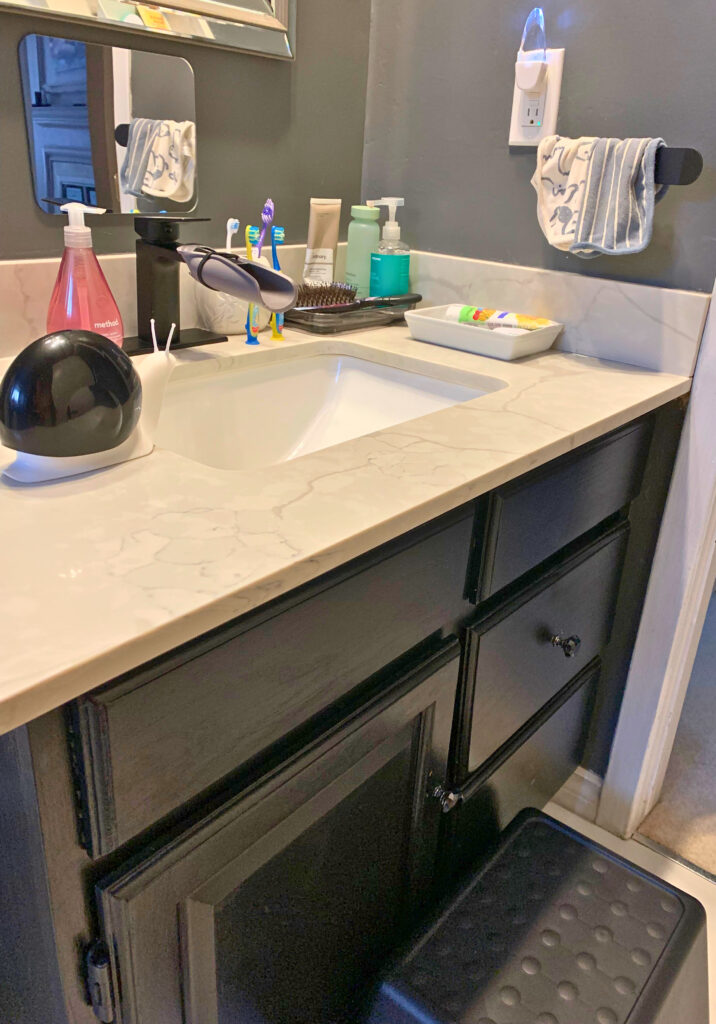
A sturdy, extra tall, light weight step stool has been a game changer. We found this one at Ikea for $10. Both twins can reach the sink, the soap, and even the light switch (which they still find wildly exciting). Having one tall, stable stool helps prevent battles over turns. If a child-sized sink is not available, a sturdy step stool allows children to reach the sink safely. Narrow and taller than most stools we’d seen on the market. With 3 toddlers and two adults all using this space, we needed on that was easy to walk around and that more than one child could use at a time if need.
Handwashing Setup: Facet, Soap and Towels
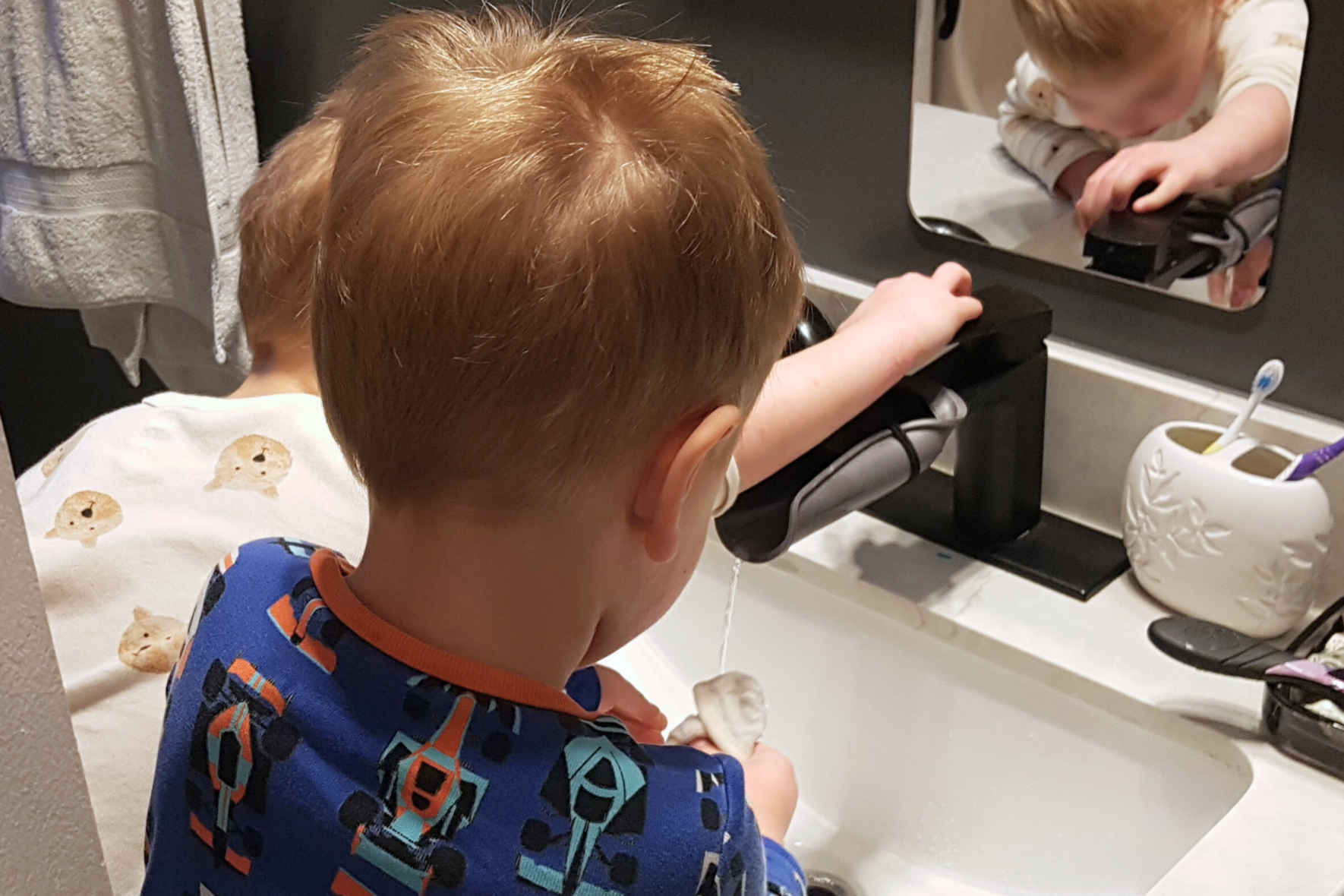
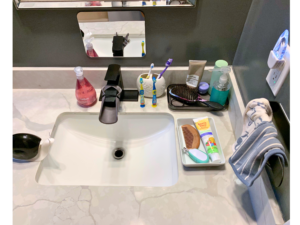
As the water flow remained just out of reach, even when standing on the stool, we purchased a facet extender. Soap and towels are also be within reach.
Because of our children’s sensitive skin (a common condition with twins) we opted for liquid over a foam soap. I’m sure a foam soap would be extra fun for other children, and encourage hand washing. Pump soap dispensers and help children wash their hands independently.
We tried an easy-to-press snail soap dispenser, which worked well for small hands and added some whimsy. Clear liquid soap also looks slimy a-la snails. Unfortunately, our twins took more pleasure in dissembling the shell. Once again, the adult option of the standard soap dispenser was their preferred choice over the perceived ‘toy’ snail.
Pumps can be a bit fiddly for children still learning. I suggest keeping the soap dispenser topped up at all times. The extra weight keeps it from toppling. You can also secure the bottom of the soap dispenser to the countertop with velcro. Easy to remove in the future, but nice and secure while children are learning.
Small, child-sized washcloths hang on the wall beside the sink. They’re easy to reach and simple to rehang for air drying between uses, supporting an organized and child-friendly Montessori bathroom setup.
Tooth-Brushing Set up
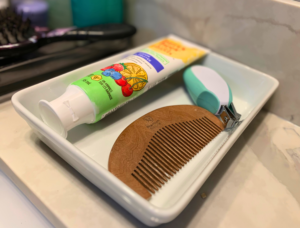
A small tray or low shelf can neatly hold a toothbrush, toothpaste, and a rinsing cup. Our family opted for suction based tooth brushes (my boys enjoy the satisfyingly ‘pop’). A small ceramic dish I found at a thrift store nests toothpaste and other hygiene essentials together on the counter. Keeps everything neat, visible and accessible supports routine-building.
Low Mirror
A mirror at the child’s eye level helps with grooming tasks like brushing hair, washing the face, and observing themselves, which supports self-awareness. My children were so proud to see themselves brushing their teeth, or washing their face in the mirror at eye level. Another opportunity to reduce friction and make practical life skills more fun. A simple peel and stick acrylic mirror worked best for our bathroom till the children are tall enough to see themselves in the standard hanging mirror.
Visual Routine Chart
For younger children, a simple visual routine chart can provide helpful cues about what comes next. Pictures that clearly display the steps of washing hands, brushing teeth, wiping their face in the ideal order can support independence and reduce adult prompting. For some children, this visual guidance relieves them of the stress of needing to memorize the routine, and makes the routines feel safe and predictable.
This approach, however, didn’t work well for our twins. They were far more interested in pointing out and articulating the the pictures than actually completing the task. They would quickly drift off course. After giving it some time to loose its novelty, we realized they responded better to short verbal reminders and modeling rather than visual prompts.
As with most things in a Montessori-inspired home, observation is key. What works beautifully for one child may distract another. Even amongst twins, we need to be prepared to adjusting based on the individual needs of the child.
Montessori Toilet Training Station
Child-Sized Potty or Adapted Standard Toilet?
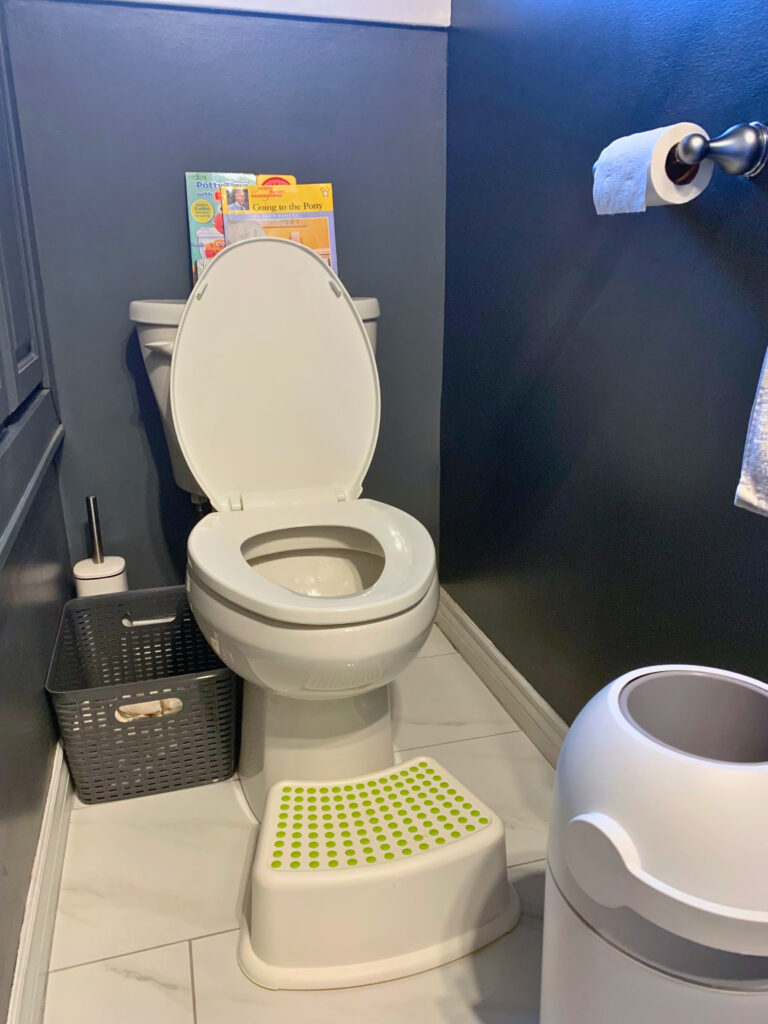
This may include a child-sized toilet, a toilet seat reducer, and/or a step stool.
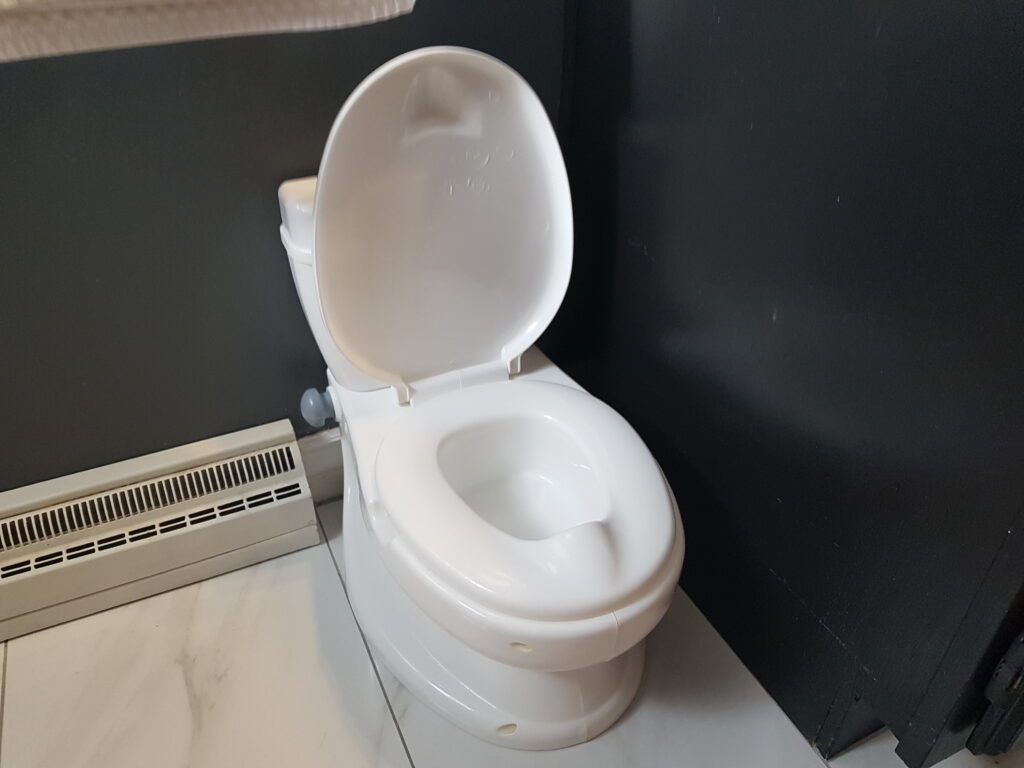
When we first prepared the space, we introduced two small, mini toilets. We wanted to observe whether our twins preferred a child-sized option, over the existing standard toilet. We also liked the idea of having a backup available in case the main one was in use by their sibling.
They showed us very quickly what they preferred.
Although the mini toilets were accessible and novel, they consistently chose to use the real toilet, preferring to be like us. The smaller toilet became something of a play object. They were curious about it, moved it around, and interacted with it as they would any new material. And that told us something important: Clearly, to them, it felt like a toy, because it was separate from what was used by the rest of the household
In Montessori philosophy, children are deeply motivated to participate in authentic, meaningful activities. They want to do what the adults do. Using the real toilet was, to them, a mark of their capability. So we adapted the environment by removing the smaller mini toilet. This experience was a good reminder that, whenever possible, offer real tools for real work. It’s also a comforting buffer against social media pushing extravagant child-only stations that most homes can’t accommodate (or afford!).
We added a secure toilet seat reducer. One at first with multistep so they could safely climb up and position themselves independently. We ensured the stool was stable enough for turning, pulling up pants, and stepping down confidently. Once the grew a little taller, we replaced this with just a step stool.
A Waste Bin For Managing Pull-Ups
Toilet training doesn’t happen over night. Many children continue to use pull ups for naps, and then still over night for months or years after they are fully toilet trained during wake hours. Have a waste bin for them to independently dispose of their diapers, or a laundry bin if using reusables. Teaching a child to manage this step themselves builds responsibility beyond recognizing the need to go, to cleaning up afterward.
Diaper genies are great for managing the smell, but I didn’t like that they required pricier refill rings. Instead, we used the Magic Majestic diaper pail. Great odor control, no propriety bags and our little ones were easily able to use it unassisted to dispose of their pull ups themselves. Possibly a good option for storing soiled reusable diapers too.
Laundry Basket Tips for Toddlers
Next to the toilet, there’s a small basket for laundry to go into as needed after toileting or to bathe. Toilet training is a slow, gradual process, and its important to keep the process positive. Having this system in place removes the shame from accidents. Instead of being embarrassed or frightened, the child is reassured that the accidents are to be expected as they learn. They knows exactly what to do should they not make it to the toilet in time, or if their clothes have become soiled from the day before a bath. They can take charge of their situation by knowing there is a safe place were soiled clothing is stored, and where to retrieve clean clothing after.
Some families opt for a clean selection of clothing/underwear to be available in the washroom. As we found the space too limited, and it’s easy to mix up clean and dirty clothing, our children simply retrieve what they need from their capsule wardrobe.
Bathing Station: Independence in the Tub
Encouraging Independent Washing
A Montessori bathing space is an extension of practical life. Just like toileting, the goal is not to rush independence but to thoughtfully prepare the environment so the child can participate in their own care with confidence and dignity. The more the child is able to take charge of their own care, the more pride their will have in their capability to do so. Still, sometimes we need to account for limits. We found that a full bottle of shampoo or soap, left within reach for the entire bath, was simply too tempting. Instead, we opted to allow each child to pump out into their hands and wash their own body and hair before the bottle was set aside out of sight for the duration of the bath. This preserved their independence in washing while also acknowledging their limit.
I have seen other families sharing that travel-size bottles worked well. Smaller containers naturally reduce over use and are easier for little hands to control. Your millage may vary.
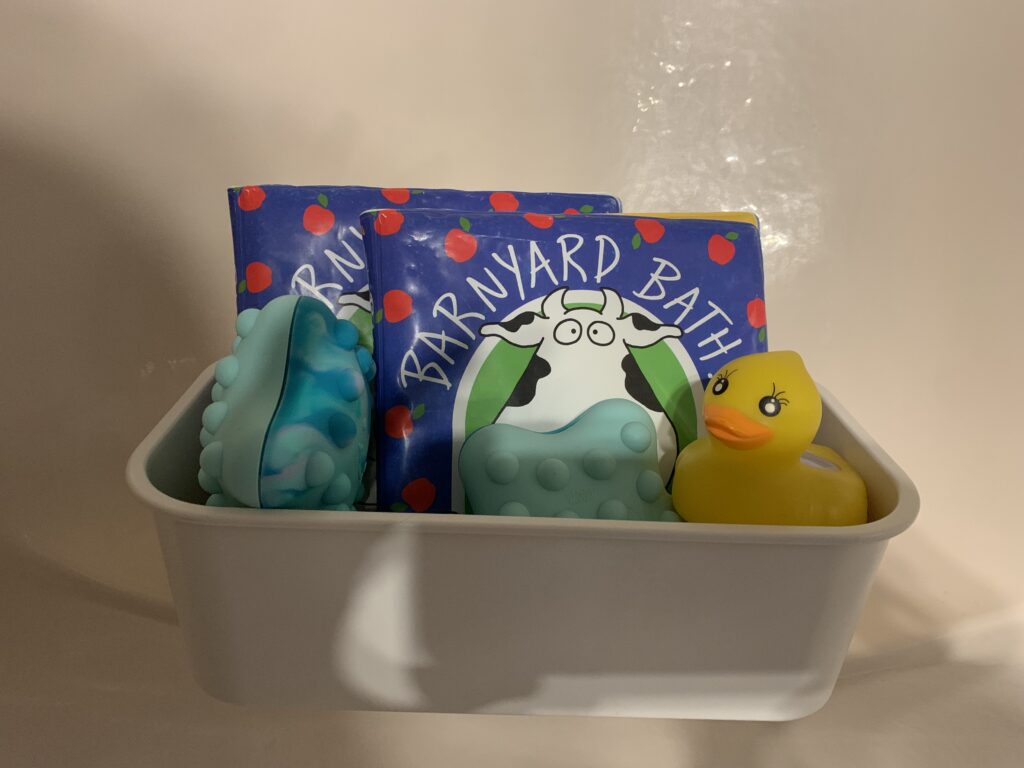
Thoughtful Toy Choices
Just like in a Montessori play space, we keep bath toys minimal, offering only a small, thoughtful selection. Bath time is meant to be a calm, restorative experience, a chance to freshen up and enjoy the warm water, so I avoid cluttering the tub with an overstimulating array of toys.
Through trial and error with our twins, we have figured out what toys are best to have two of and which toys only need one. Plastic beach toys that allow for pouring, transferring water, and watching the water seep through are big hits. These are also useful for rinsing hair which allows them to wash with more independance.
Personal Hooks for Each Child
Each child has their own hook for retrieving their towel and bath robes. They then hang up their towel after bath time. This small detail reinforces responsibility over the objects they use, rather than leaving them on the floor for parents to tend to.
Freedom within Limits
In Montessori philosophy, their is a great emphasis on prompting independence in our children. When a child can wash their own hair, rinse independently, retrieve their own towel and dry themselves, they are learning to take pride in their own self care. These are true features of what we call practical life skills. But independence at bath time does not mean leaving a child unattended. Safety should always be paramount. This means giving the child meaningful opportunities to participation in their own self care while the adult maintains safe boundaries for them.
Strategies For Common Bathroom Struggles
As a twin mom, I know how challenging daily routines can be, especially during transitions like mornings and bedtime. Children’s feelings about brushing their teeth can change from day to day. Some days I am better equipped with patience, and others I am just as over tired and ready to be in bed as they are. Observation helps us respond thoughtfully rather than reactively. Ask, “How can I prepare the environment so they can succeed independently?” The environment is the challenge to overcome, not the child.This approach aligns with Montessori in supporting the child’s natural drive toward independence and mastery with dignity and respect.
Toothbrushing Resistance
In a Montessori home, tooth brushing can be introduced as soon as the first teeth appear. At this early stage, the goal is not perfection, but familiarity and participation. Offer a child-sized toothbrush and allow your baby to explore it freely. Holding the brush, they can bringing it toward their mouth, and becoming comfortable with the feeling. This early exposure supports curiosity and builds trust.
Modeling is an essential part of Montessori learning. Brush your own teeth slowly and deliberately where your child can see you. Many children will attempt to imitate your movements or reach toward your toothbrush. Narrate simply and positively: “Mama is brushing her teeth.” This clear, respectful language helps your child connect words with actions.
Children respond to tooth brushing in different ways. Some enjoy the sensation, while others may strongly resist. Whatever the response, approach the experience with calm reassurance. In Montessori, we maintain firm yet loving boundaries. Brushing teeth is an essential part of caring for the body. It is not optional, but it can always be offered with gentleness and respect.
Toddlers are often in a sensitive period for independence. Harness this by offering choices within clear limits, where both choices are acceptable. For example, instead of asking “Is it ok if we brush our teeth now?” Ask “Would you like to brush teeth first, or PJs on first?” or even “Which toothpaste would you like?” if you are comfortable stocking more than one. Honestly an extra tube or two on hand that never get picked is worth preventing a power struggle. Both options respect the child’s autonomy while preserving the routine.
Montessori emphasizes independence, but also recognizes the adult’s role in ensuring health and safety. Allow your child to brush independently first, then calmly let them know when you will help. You might say, “You brushed your teeth. Now I will help to make them clean.” This is not framed as a correction or consequence, but as a natural part of the process.
Dress for Toileting Success
Supporting toileting independence, at its core, is about preparing the environment so that the child is fully able to participate and explore without unnecessary barriers. Clothing, it turns out, can be a significant barrier. The catalyst for our twins’ capsule wardrobe, in fact, was the realization that their toileting journey began much sooner than we had anticipated, and much of their wardrobe was unsuitable.
When selecting clothes your toddlers, keep it simple. Elastic waistbands, soft pull-on pants, and shoes without complicated fastenings allow children to dress and undress quickly. Prioritize comfort over fashion. Clothing that is too tight or difficult to remove creates unnecessary stress during an already new and challenging milestone.
Some toddlers feel most comfortable removing their bottoms completely rather than leaving clothing around their ankles. Skinny jeans or tightly tapered bottoms that constrict at the ankles can feel restrictive and distressing when a child is trying to undress quickly. Choosing loose-fitting, easy-to-remove clothing reduces frustration and supports a smoother toileting routine.
Adjusting their wardrobe helps support toileting independence in the Montessori bathroom, strengthening their growing self-care skills. Toddlers can instead focus on recognizing their body’s signals instead of asking for help. This small change has had a big impact on their confidence and ability to use the toilet independently.
The Twin Factor In The Bathroom
With twins, it can be tempting to have booth children completing their bathroom routine the same time for the sake of efficiency. Twins may even initially advocate for this with a fear of missing out (FOMO). In our home, joint us of the bathroom often led to distraction and frustration. Especially with toilet training.
Instead, we have tried to model the importance of privacy, and independent usage of the bathroom as the norm. In the very early months, this also created some lovely one-on-one moments with each child. One child for example would brush, while the other waited nearby with a quiet activity. As my twins grew older and the routine became internalized, bathroom tasks became more manageable and less novel.
Final Thoughts On Your Montessori Bathroom
Embracing a Montessori bathroom is one of the most meaningful adjusts we have made in our home for our children. Sometimes Montessori can be misrepresented as actives or products that simulate practical life skills, rather than functional changes in your home that truly support a child’s independence. For our children, the standard real life option, slightly modified, was always the preferred choice to child-specific alternatives.
By thoughtfully preparing the space, children are entrusted with their own self care and a deep rooted sense of autonomy.