If you’re wondering how to encourage toddler independence at home, Montessori parenting offers a simple, practical approach. By creating the right environment and inviting your child into daily life, you can help your toddler build confidence, focus, and real-life skills from an early age.
At it’s core, the Montessori approach for parents is all about setting your children up to navigate the world with a sense of internal peace. A broad confidence and emotional stability that they are capable. Capable of caring for themselves, their environment, and in some ways, the great community. This is a gradual process of course, but one that children are already eager to engage with.
The Best Age to Start Montessori Independence for Toddlers
Montessori recognizes important opportunities for independence as early as infancy, but it becomes especially visible during the toddler years. Even at 12 months, and throughout the toddler years, most children have a natural drive towards independence. Children are curious about doing things for themselves, such as feeding, dressing, and exploring their environment. This drive comes from what Maria Montessori describes as an absorbent mind. A child is always watching, always taking in new information about the world around them. For most children, the adult need only step back and allow their children the freedom to act on this drive.
1. Create a Prepared Environment for Toddler Independence
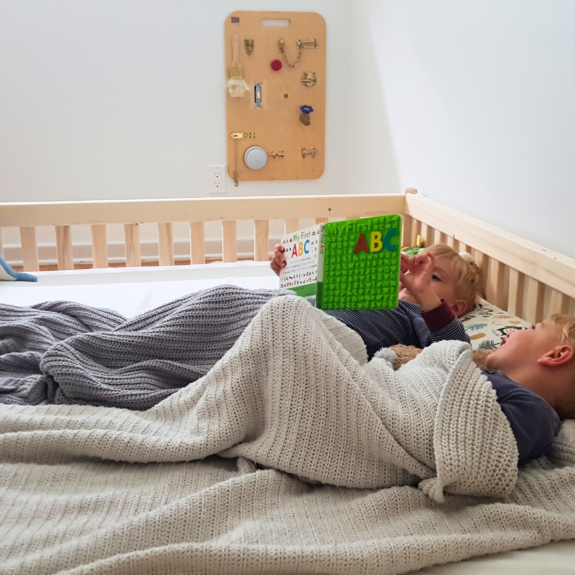
One of the most important Montessori principles for fostering toddler independence is the prepared environment. This means setting up your home in a way that allows your toddler to access what they need safely and independently. When a child has to ask and wait for every basic necessity, they miss valuable opportunities to practice independence. Likewise, oversized furniture or tools that are too heavy or awkward can make even simple tasks frustrating and discouraging.
A thoughtfully prepared environment removes these barriers. It invites your toddler to participate in daily life, make choices, and develop confidence through real, meaningful activity. For real-life examples, you can read how we created a Montessori home environment for toddlers with twins and multiple children in mind.
Montessori parenting emphasizes preparing the environment, observing your child, and trusting their natural desire to learn and do things for themselves. As a parent of young children, especially multiples, the need for practical rhythms and shared responsibility becomes clear very quickly. Beyond making daily life more manageable for everyone, encouraging independence in toddlers builds confidence, concentration, and a deep sense of personal pride.
In simple terms, this means setting up your home so your child can safely access what they need without constant adult help.
“The essence of independence is to be able to do something for one’s self.”
Maria Montessori
2. The Value of Participation and Inclusion in Children’s Work
Children thrive when they are invited to participate in the work of the household. Being invited to contribute fosters a sense of belonging. It reassures them that their presence matters and that their efforts are valued.
Work that draws children in are not necessarily the easiest or the most glamorous task. Laundry is currently the most celebrated chore. What typically motivates my children is the sense of adventure (inhabiting spaces infrequently visited) along with a sense that the work is meaningful.
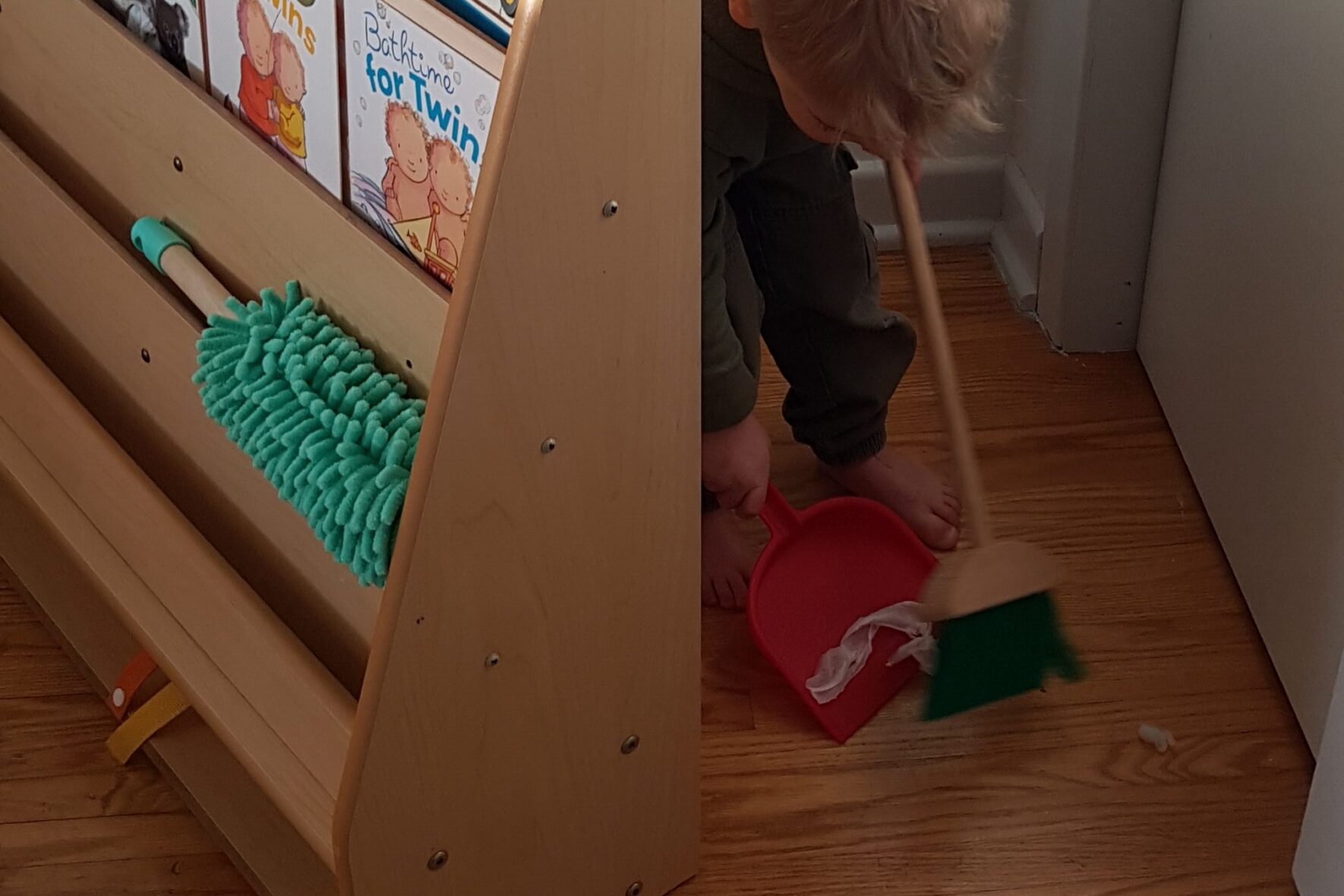
Parallel work is an excellent tool for parents to piqué the interest of children. In this, we model taking a hands on role in the care of the environment. Whether it’s washing windows, wiping down surfaces, unloading the dishwasher, or raking leaves together, the work is more appealing to little ones when done together. In this shared space, adults model the action and the child observes and imitates.
3. Real-Life Skills Through Daily Routines
Our home runs on a steady rhythm, with each activity informing the next rather than following a strict schedule. The day starts with toileting, followed by breakfast, personal hygiene, and self-dressing before open play. Most days that aren’t too cold lead into outdoor time. Each of these sequences is bursting with micro-opportunities for independent care that lay the foundation for confidence and self-reliance. Our children have come to depend on each sequence flowing into the next, knowing what to expect. They feel secure in that rhythm.
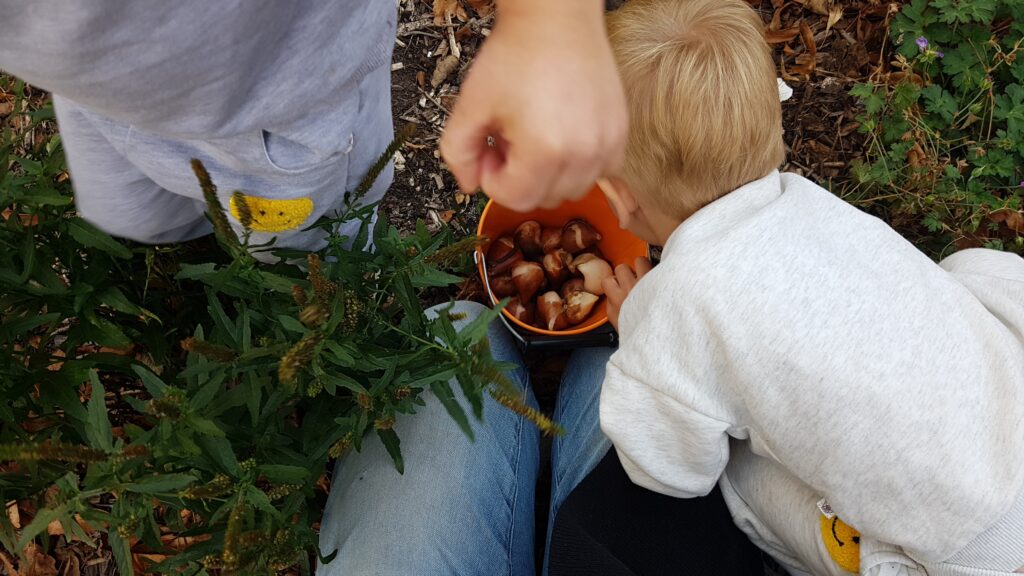
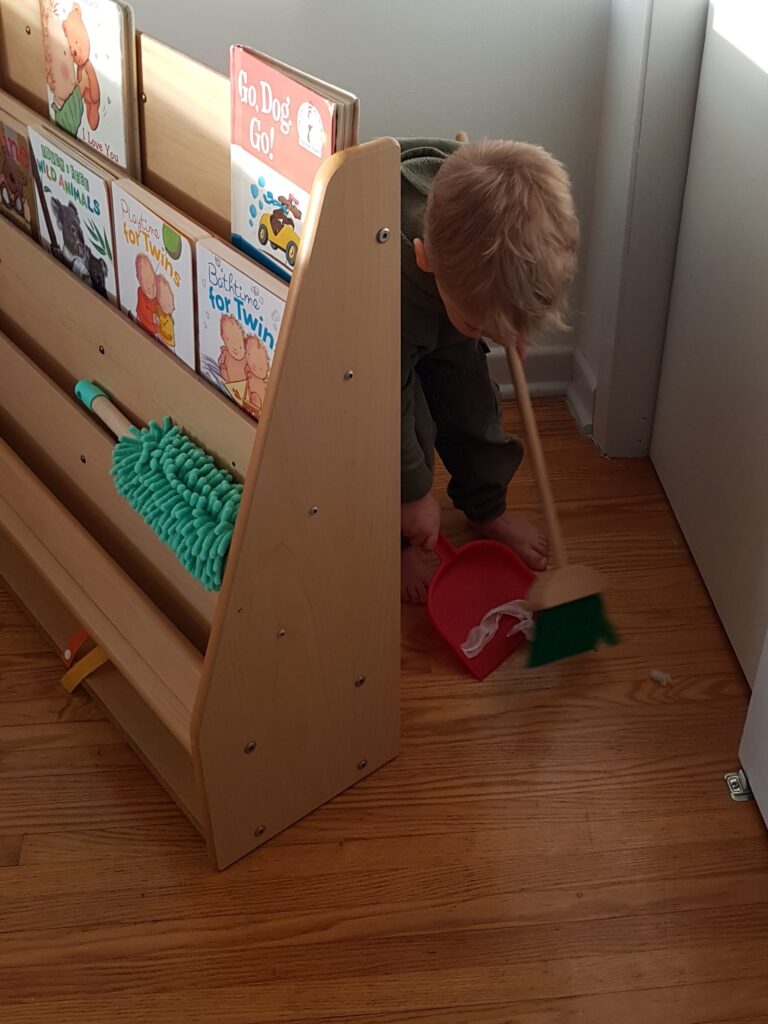
Chores like emptying the dishwasher, dusting, vacuuming, restocking from the pantry, yard work, and laundry are all excellent opportunities to strengthen toddler independence in caring for the living space. We peppered these tasks throughout the week as needed. Some weeks are more streamlined, while others are more cleaning-intensive. Our toddlers may even spontaneously start cleaning when they notice their environment is out of order.
With twins, staying on task can sometimes be a challenge. It only takes one to create a distraction, and then both quickly devolve into giggles or curiosity about a new discovery. I try to allow opportunities for whimsy and playfulness while also reinforcing firm boundaries. We don’t progress to the next step (especially if it’s something they favour) until they complete the current task. For example, breakfast comes after toileting, and they wash hands, face, and teeth before selecting clothes for the day.
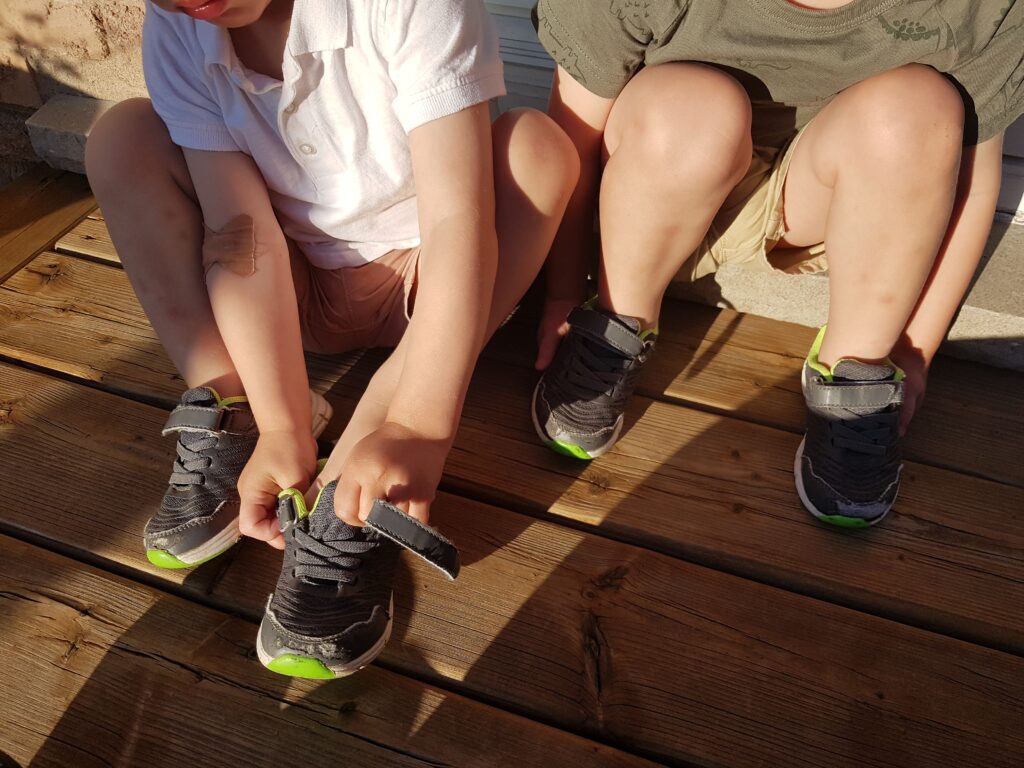
“Any child who is self-sufficient, who can tie his shoes, dress or undress himself, reflects in his joy and sense of achievement the image of human dignity which is derived from a sense of independence.”
Maria Montessori
4. The Power of Observation and Patience in Montessori Parenting
One of the biggest shifts in a Montessori approach is learning to pause before stepping in. This pause gives space for independent problem-solving, a key part of developing toddler independence. It can feel instinctive to help immediately when a child struggles, but often they just need time.
By observing first, we allow the child time to process the challenge before them, and explore possible solutions in their own time. A child’s brain processes more slowly than a healthy adult brain. So, it physically takes them longer to process what they are doing and what needs to be done. This is why it can feel so uncomfortable watching a child fumble, as our brains have physically made the connection so much faster than theirs. At the very least, parents should try silently counting to five before stepping in. Avoid intervening altogether if possible.
A child who is continually ‘helped’ may come to expect it.
“The child who has never learned to act alone, to direct his own actions, to govern his own will, grows into an adult who is easily led and must always lean upon others.”
Maria Montessori
5. Value Effort Over Perfection to Build Confidence
In Montessori, when and how we offer commentary on our child’s actions is given more thought. Generally, if praise is given, it’s for the effort the child put into the activity rather than whether the child was successful. The effort is worth more than results. Children should never be discouraged that their attempt was not enough, or as good as someone else’s (especially in comparison to adults). A child who is shamed may be hesitant to learn, for fear of failure.
The opposite end of the spectrum is also true—a child praised only for success may hesitate to take on new challenges. The fear of failure, and thus not receiving praise, may influence a child to stick with what they already know.
For these reasons, a good rule of thumb is to say as little as possible, but to offer praise that rewards effort over outcome. Sometimes a smile or a nod is all the reassurance a child needs. The goal is for the child to foster an internal sense of pride, where the love of learning is rewarded with a sense of personal accomplishment and satisfied curiosity, rather than stickers or applause. One who doesn’t require the approval of others.
“If you interfere impatiently and stop some absorbing occupation, you will destroy your child’s concentration and perseverance – valuable lessons he is teaching himself –, he will be dissatisfied and filled with a sense of disappointment and restlessness, and may very likely find an outlet in deliberate mischief.”
Maria Montessori
6. Softly Trusting the Process Towards Independence
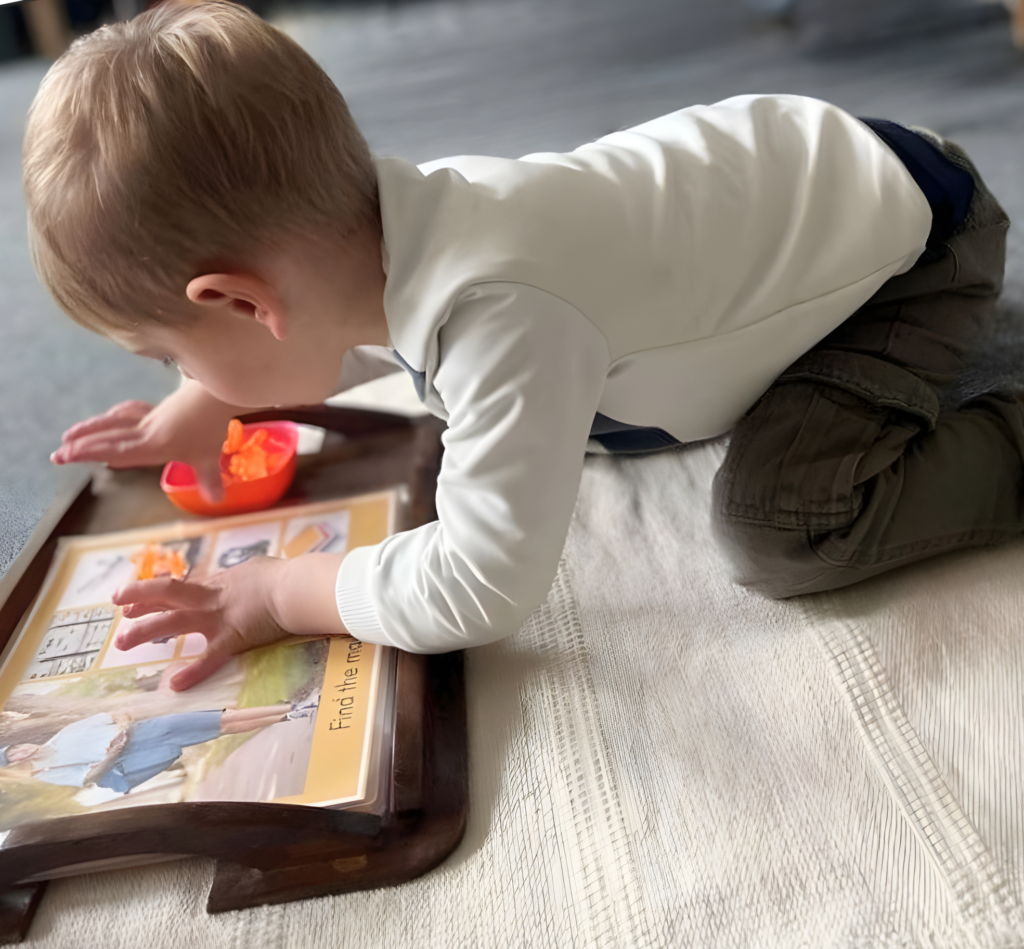
Guiding an independent toddler through a Montessori lens requires a mindful shift in how an activity will progress, compared to when we do it on our own. We are forced to slow down, embrace (or at least accept) messes, and trust that our children are working at their own rhythm. This is part of the personal growth that comes with motherhood.
Some days, our patience will not be at full strength. We may be working on a compressed timeline or with an overstretched mental bandwidth. With twins, there is no maybe about it.
Promoting toddler independence has obvious self-serving advantages—a long-term solution to lessening our labour, both seen and unseen. But in the moment, especially in those early years, it can be tedious. Even overstimulating, because a lot of patience and reflective thought is required. In this pressure cooker, the temptation to just do things for the child can be stifling.
There will also be times when the voice in our head, sometimes irrationally, fears the child is taking greater risks than we are comfortable with. Even when the child (or the environment) is likely in no danger at all. That maternal instinct to protect sometimes works against us.
“The child who has never learned to act alone, to direct his own actions, to govern his own will, grows into an adult who is easily led and must always lean upon others.”
Maria Montessori
A Gentle Reminder For Montessori Parents
We must be gentle with ourselves. Sometimes children grow up faster than we’d like, and it’s tough to meet them where they are in the moment. There will be days when we step in too quickly, and others when we regret not jumping in sooner. In offering trust to our little ones, we are also learning to trust ourselves. At the end of the day, no matter how the day ended, you should feel reassured that you made the best call you could with what you knew in that moment. After all, the process of promoting toddler independence is a learning experience for all involved, not just for little ones.