
Sustainability and Montessori should be natural bedfellows. After all, Montessori embodies how the choices we make today are an investment in the person our child will become. Our present shapes their future.
Buying second hand, repairing what we own, choosing natural products and making do with what we have are seamlessly woven into the rhythm of our days. Some of these values were present before children. All the more why Montessori parenting was a natural fit.
Sustainability isn’t positioned as a novelty or an after thought. Rather, we are preparing the home Montessori environment with the greater global environment in mind. It’s symbiotic.
Here are some practical ways we practice Montessori in our home with sustainability at the forefront of our mind.
Stepping Into Sustainability As A State of Mind
Prioritizing ‘Reduce’ First
When people hear the phrase reduce, reuse, recycle, their minds often leap straight to the last step: recycling. But reducing our over-consumption should always come first. It’s the most impactful part of living sustainably, even if it’s not best for business.
Our family values treasuring hand-me-downs and making the most of what we already have. Some of this is done with disciplined intention, and sometimes it’s just mundane necessity. When we do need something new, or new to us, our first stop is always the thrift store, a curbside find, a garage sale, or a second-hand seller. I keep an ongoing list of things to look out for in my phone.
We follow their interests, and feed their areas of fascination as they come. In Montessori, this is know as following the child. Items are purchased as needed, avoiding the haul mentality that often leads to over-consumption, and hoarded closets waiting to be rotated in.
Side Stepping Affiliate Links
You’ll notice that Montessori with Multiples doesn’t contain affiliate links. That’s a deliberate choice.
I’d estimate that 90% of my children’s clothes, toys, books, art supplies, and furniture have been purchased second-hand. Lots of treasures are free found. We’ve become very comfortable waiting to see what we can find used. And it’s so freeing just to borrow, repairing or skip items that are simply wants, not needs.
From time to time, I come across parenting content with long lists of products being promoted as “must-haves”. Often, they’re filled with affiliate links or Amazon storefronts, featuring products that may or may not reflect what is extensively used in their own home. And to that, it may not be a good fit for your home. But I’ll address that in the next section.
This is just not how I want to approached connecting with other Montessori families.
When most of what comes into our home has already been lovingly road-tested, it feels a little odd to encourage families to go out and buy something new, when that’s not what we model for our children.
Montessori teaches slowing down, observe, and make thoughtful use of what we already have before bringing something new into our home. I’d rather share ideas, work arounds, and celebrate finding good Montessori-aligned materials closer to home in place of affiliate links.
Resisting FOMO In Your Montessori Space
FOMO and mom guilt are very real. It’s easy to assume that every product recommended is something the creator personally owns and loves. Beautifully styled rooms, curated shelves, and aesthetically perfect homes attract views, and it’s easy to wonder if our children are somehow missing out.
In truth, Montessori requires we follow the child’s interests, not the algorithm. You are only chasing disappointment, and frustration that may be felt by your child.
The turn over with children’s materials is so quick. Children don’t inherently blossom better in spaces filled with brand-new materials in place of pre-loved ones. The prepared adult is one who is tuned into the budding interests and developing needs of their child, not an algorithm’s expectations of what a Montessori childhood should look like.
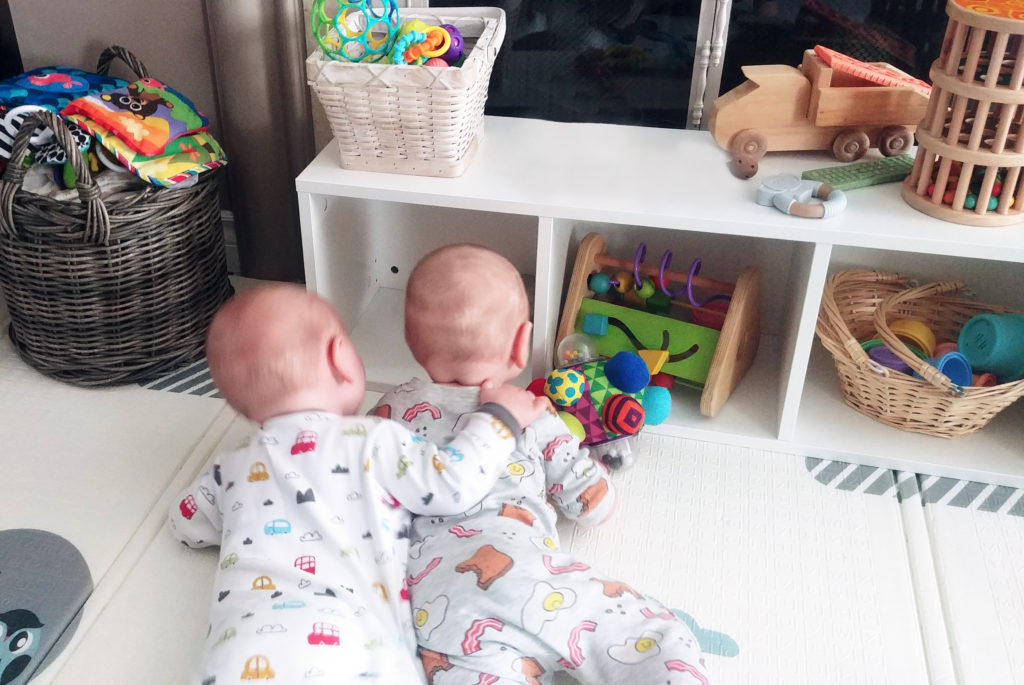
Everything you see in this photo — the shelf, play mat, baskets, toys, and the clothing, happens to be second hand.
Hands On Sustainability In Our Montessori Home
Here are a few of the loving ways we express our sustainability values in our Montessori home.
Repairing Broken Children’s Books
My twins broke a lot of board books. Never maliciously or even mischievously. They just seemed to want to bend them backwards or at odd angles to take in as much of the illustrations as possible. They were especially keen on matching illustrations from the front, back, or spine of the book with duplicates found on the pages. When you have two babies (and then three babies) in your lap, it’s hard to control all those curious hands.
For me, books are sacred. The majority of our books are second-hand, so that lifts some of my distress. Still, I wanted our children to understand respect for their belongings. Never to jump straight to spending more money when a more sustainable and frugal option is within reach.
I started putting these broken books aside for repair. A bit of trial and error is needed to find what works, and ultimately what’s within your skill set. Not every book can be repaired. One of our favorites, The Very Hungry Caterpillar, sits coverless on the shelf and is still well loved.
Some books were repurposed into flashcards. An X-Acto knife down the seam does the trick. It’s also a great art piece if you stick Velcro to the back and then the wall. Bam, instant child-approved artwork from their beloved book that can easily be rearranged or swapped out.
Saftey Note:
These solutions were preform out of sight. Too much fiddling and sharp objects to be accountable for tiny fingers. When my children are older, I will show the how to repair a book. For now, I simply tell them what I am planning to do and show the result. Even when the project doesn’t go as planned.
The focus is imprinting the understanding that there is still a lot of worth in giving objects a second life.
Melting Down Broken Crayons To Make New Crayons
My twins broke a lot of crayons. Never maliciously or even mischievously, but I repeat myself.
Part of the problem was trying to buy off brand crayons. They snapped so easily with normal use. Sometime they snapped rolling off the table. The savings were not worth it. I tried encouraging them to still colour with the crayons, but they weren’t having it. So I kept collecting crayon pieces until I had enough to melt into new, structurally sound crayons.
Together we removed the paper wrapping, and snapped the crayons into even more manageable pieces. Once is always with toddlers and preschoolers, so I explained to them that this was a special activity. That crayons should never be broken intentionally, only today for our craft. I will revisit this again next time the regular crayons go out for extra insurance.
Here’s a tutorial you can follow for melting down crayons with a microwave, and one I used for melting down crayons in the oven.
Care and Repair of Clothing
Having Fewer Clothes
When I found out we were expecting twins, I stocked up on everything second hand. I was unsure what to expect. Would my twins be tiny preemies? Heavy weights and overdue?
I reasoned more was better than less. Such tiny clothing would have lots of time to pile up before the wash was worth running. This was a fine strategy for the newborn stage and the rolling over stage, but once the boys took off crawling and climbing, I could not afford the time to pre-soak, wash, dry, fold and hang so many clothes.
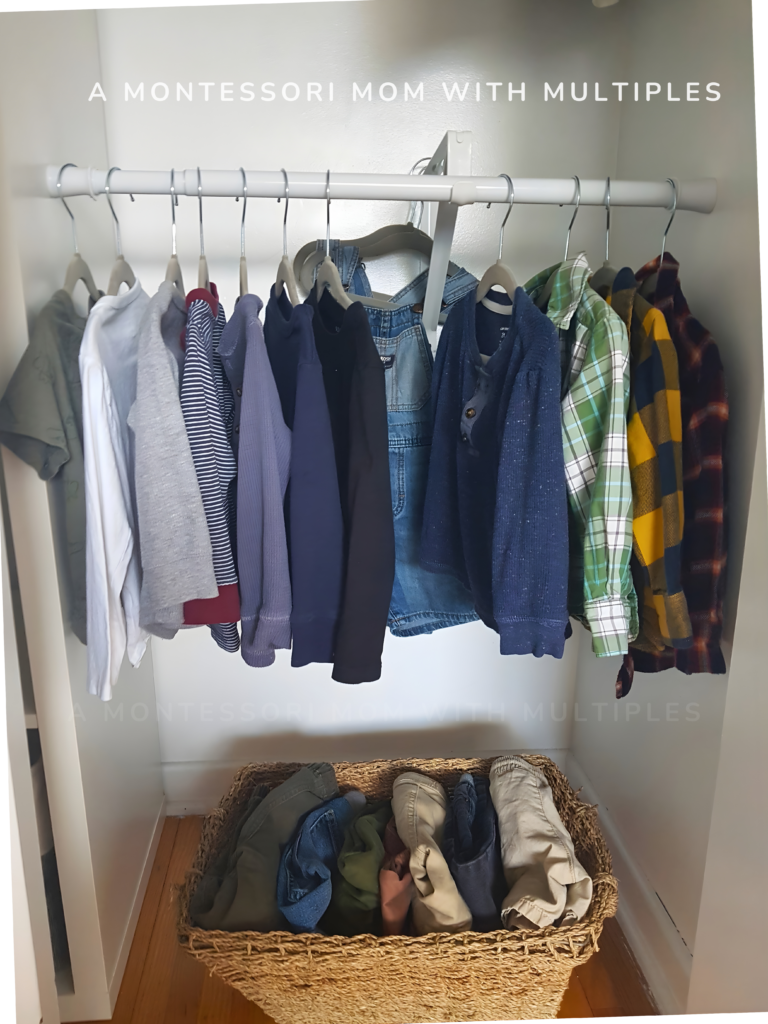
That’s when I discovered the magic of a capsule wardrobe and created this simple guide for How to Make a Montessori Capsule Wardrobe . It completely changed the way I approached our daily routines for my twins.
Capsule wardrobing forced me to be intentional with the selection of clothing my children would be choosing from, and look at the whole picture of our daily rhythms. As a result, we have a carefully selected collection of clothes that worked hard and were well worn.
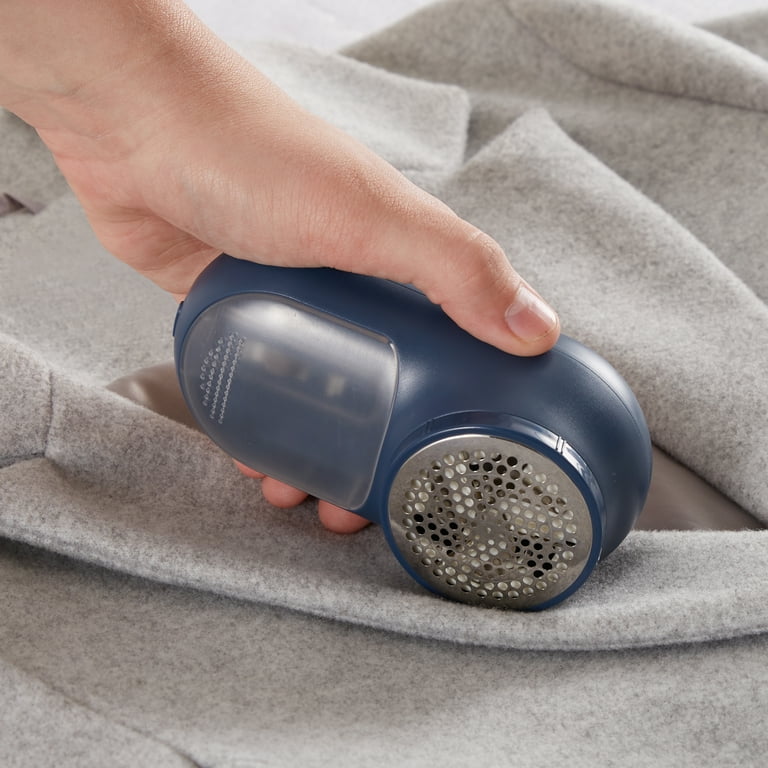
Lint Shaver
This is the ultimate tool for moms who buy nearly all their children’s clothing second hand. This gently shaves away fuzzy bumps from clothing to give it a smooth, always like new finish.
I will often give well worn clothes a once over with this before donating out grown children’s wear to the thrift store to be sure the item is accepted and not end up in a rag pile.
Pants Into Shorts
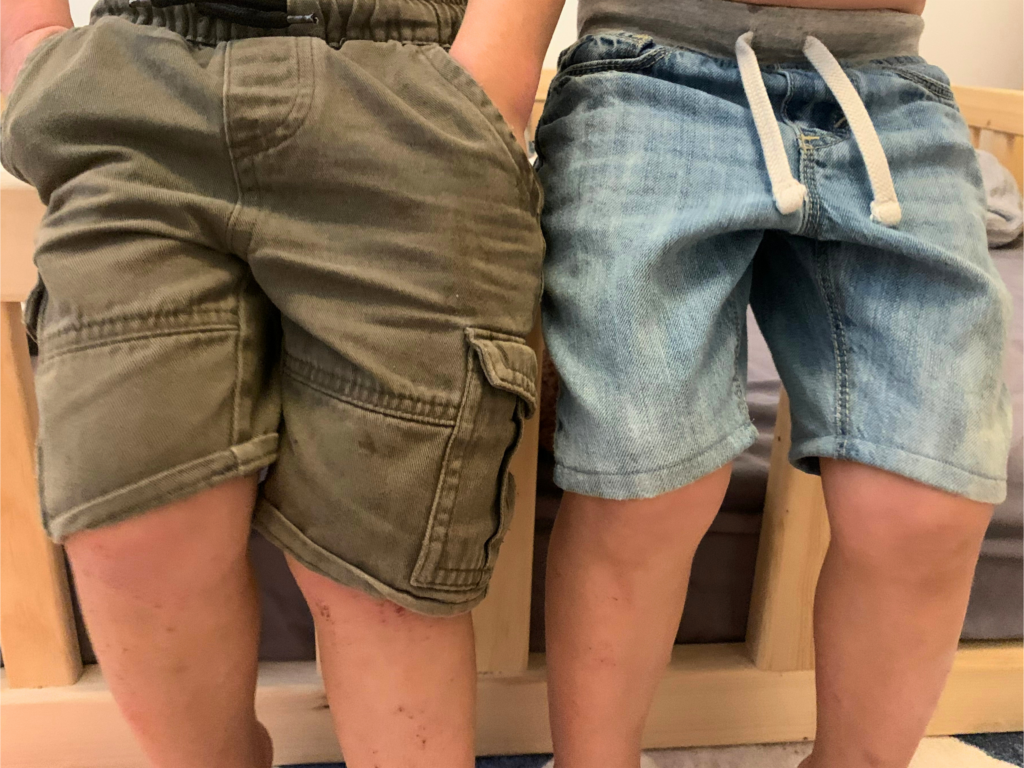
Our children are high energy, high impact in everything they do. Even the best quality fabrics can only bare so much. Inevitably the knees wear out. I think that’s why I have found substantially fewer second hand stock for sizes 3y-5y pants. Likewise for 12-18 months, the hybrid crawling and falling months.
Shorts with holes in the knees are converted into shorts. Disclaimer, the cut can be a bit high for current day boys fashion to work around the rips. Especially if you like the cuffed look. I think they look just fine. My boys are perpetually a blur, so you can’t tell.
Here’s a simple tutorial is you are a none sower.
Food Choices That Reduce Waste
Make Meals At Home
Young children can be so capable in the kitchen! As a stay-at-home mom, I spend a lot of time in the kitchen meal prepping, cooking, and washing dishes. Naturally, my toddlers want to be where the action is.
Learning to cook is a life long practical skill. Preschoolers and even toddlers are already surprisingly capable of helping. Ours wash fruit and vegetables, peel hard-boiled eggs, slice soft fruit like bananas, make sandwiches, and, their favourite, retrieving items from the pantry.
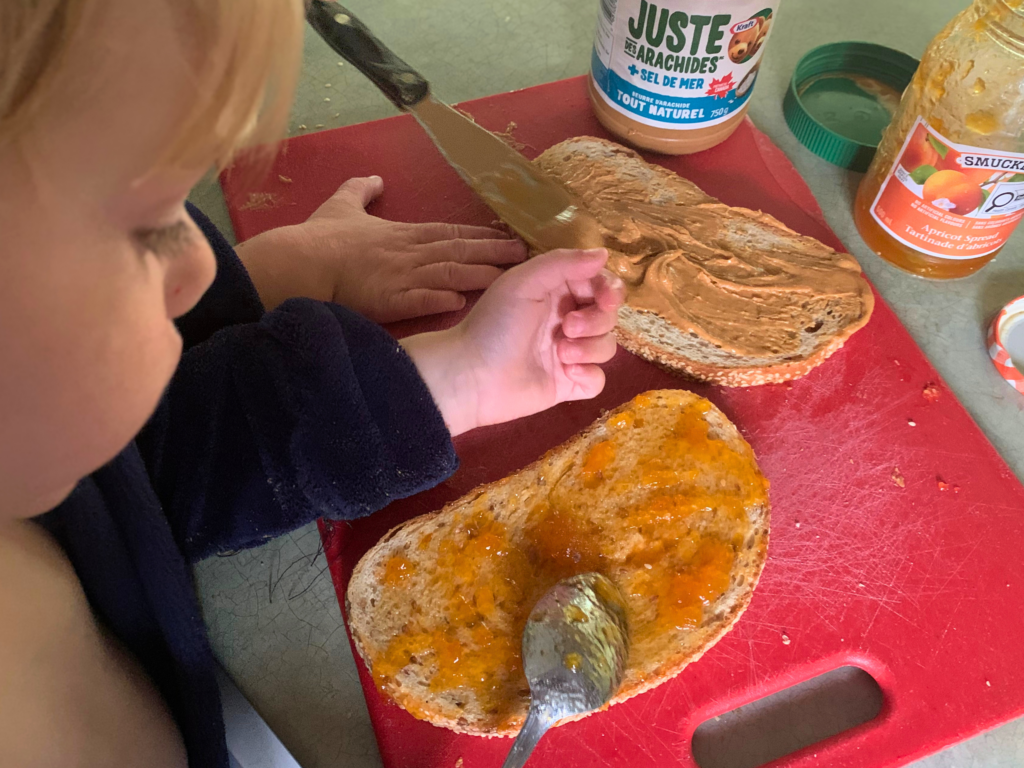
If you’re just too overwhelmed and anxious to let your little ones go hands in the kitchen (yet), that’s okay. Give them choices of what will be on the menu, and walk them through each step. Expect a lot of whys. This helps children understand where food comes from long before they (or maybe you) are ready for helping in the kitchen.
Making meals from scratch means you control the portions (less waste), reduced food packaging from take out (less waste) and teaching your children how to cook means they won’t have to lean on prepacked meals later in life (less waste).
Single Use Plastic Free Picnics
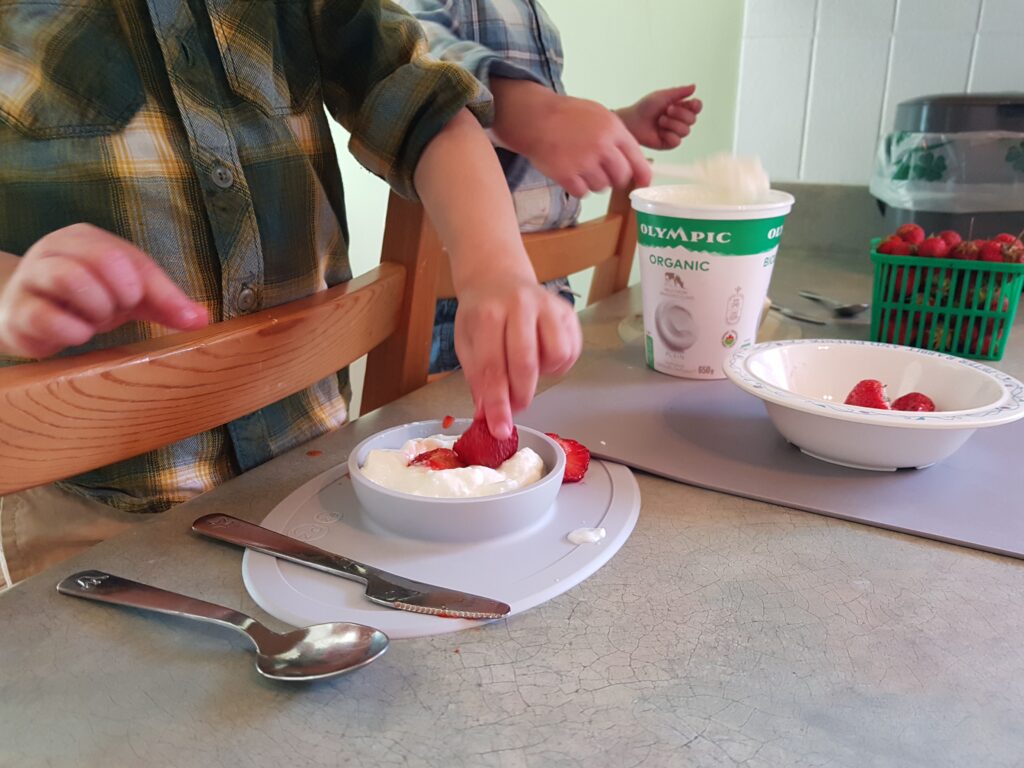
With three toddler, we prioritize time out of the house. It makes so much more sense for our family to have food at the ready, rather than wait in line or sit down ordered food. Much cheaper too.
Our packed lunches or picnics include reusable water bottles, reusable food containers, and cloth napkins. Finger food is the mainstay, but we’ll bring and reusable cutlery if needed. I’d rather pack away food containers for easy ongoing snacking, than carry garbage around till we come across a bin.
Everyone is responsible for their own reusable water bottles. For longer day trips in nature, I divide up our picnic into their backpacks to share the load. I’m already down two extra hands as it is.
Going plastic free is equal mix health, frugality, and easier clean up. I struggled to find prepaged snacks that weren’t hyper processed or loaded with sugar. Whether labeled ‘healthy’ or not, the price per snack was still very expensive.
Snacks we pack in our picnic include a mix of hard boiled eggs, bananas, apples, mini or sliced cucumbers, crackers, cheese, and sometimes goldfish.
Composting On The Counter and In The Garden
Cleaning up after a meal is a practical life skill. Composting is a component of that. Our children are learning what foods are compostable. What goes where and the rationale behind that decision. Some items are set aside for our home garden compost, and the rest for city compost pick up. We have a bin on the counter top they access independently.
Looping back into the earlier point of making food from scratch, involving them in the cooking breaks down the ingredients before they are mixed into the dish. Helping them better to spot compostable components, even when cooked.
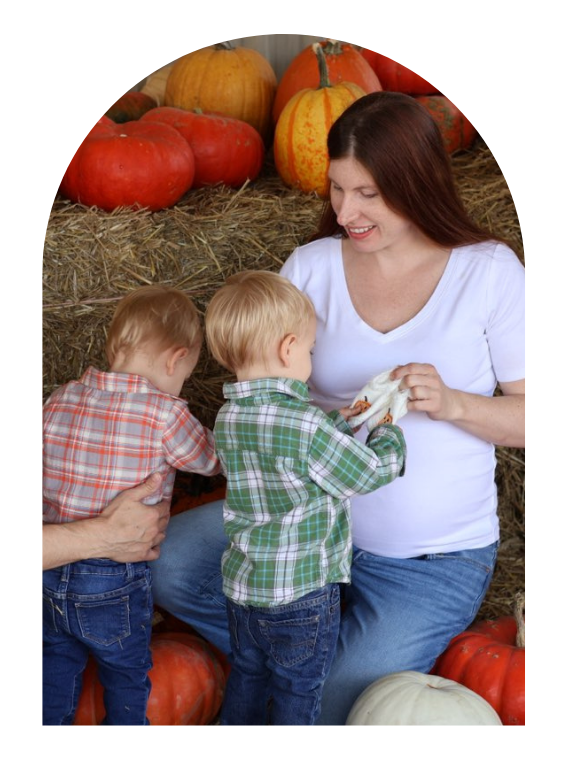
Hello, I’m Tabitha
A Montessori Mom of Multiples, sharing our family’s rhythm through a Montessori lens.
Here you’ll find honest reflections and practical ways to bring Montessori into your home while raising twins and multiple children.
This is a space built on respect and intention. I choose to keep my children’s faces private, share respectful content, and never use affiliate links. Everything I write is crafted through lived experience, careful observation, and a genuine desire to support other families.
A casual blog you can count on to be honestly written and lovingly informed on motherhood with multiples.