Is there any blog post more niche than a left-handed Montessorian twin? Even so, I think it’s worth writing about. There are many surprises and curve balls our children will come up against in the world. Often, the world pushes back, expecting conformity. Here I’ll give a brief, but still important look at how we are supporting our child’s left-handed preference in a world built for right-handed people.
Raising a Left-Handed Child Without Letting Statistics Define Him
Lefties make up around 10% of the world’s population, skewing slightly more towards males than females. There are all kinds of studies and myths (which I’ll get to) praising or demonizing being left-handed. Most are greatly exaggerated or outright debunked.
Left-handed people do tend to excel in quick reaction sports like baseball, tennis, fencing and boxing. For example, 30% of elite pitchers are lefties. Some studies suggest greater creativity and appreciation for the arts, but this might be over hyped. I steel myself against imprinting any expectations.
Children absorb expectations so quickly. Especially with siblings involved. Just because there is a statistical advantage (or deterrent) doesn’t mean I should be pushing my child towards that. In fact, my twins hit all the markers for a statistically higher likelihood of becoming a professional hockey players, but for many reasons, we do not feel it would be wise to explore. Instead, I prefer to focus on giving them broad exposure to experiences, with a home environment that allows their own interests to emerge naturally.
If left-handedness brings anything unique to the table, let it be a fresh perspective. A different way of approaching challenges and forming connections that otherwise go unseen or unappreciated. My role is not to steer him to walk a predetermined path. Simply to observe, helping to cultivate a prepared environment that works with him to pursue his natural interests.
Watching His Left-Handedness Emerge
It was through the power of observation that I first noticed one of my twins (yes, the left twin by all luck) was showing interest in eating and drinking with his left hand.
As early as 7 months old, I noticed that Twin S strongly favoured his left hand.
We started baby led weaning with seats that my twins could easily crawl in and out of to promote independent movement around 10 months old. One of my favourite photos of him is sitting in his baby-led weaning chair, chomping on a cucumber spear held in his left hand, looking remarkably like Sir Winston Churchill — bald head and cigar alike. Because I was seated in front of Twin S, I was mirroring him. I noticed he would take items from my right hand straight across with his left hand.
I was mindful that I might be influencing him, so I tried to make reaching for items in my hand more central. A left-hand preference persisted.
The Fascinating Development of a Left-Handed Toddler
Now an adventurous 3-year-old, he still prefers his left hand for most activities. Like many lefties, he seems more ambidextrous than the average right-handed child.
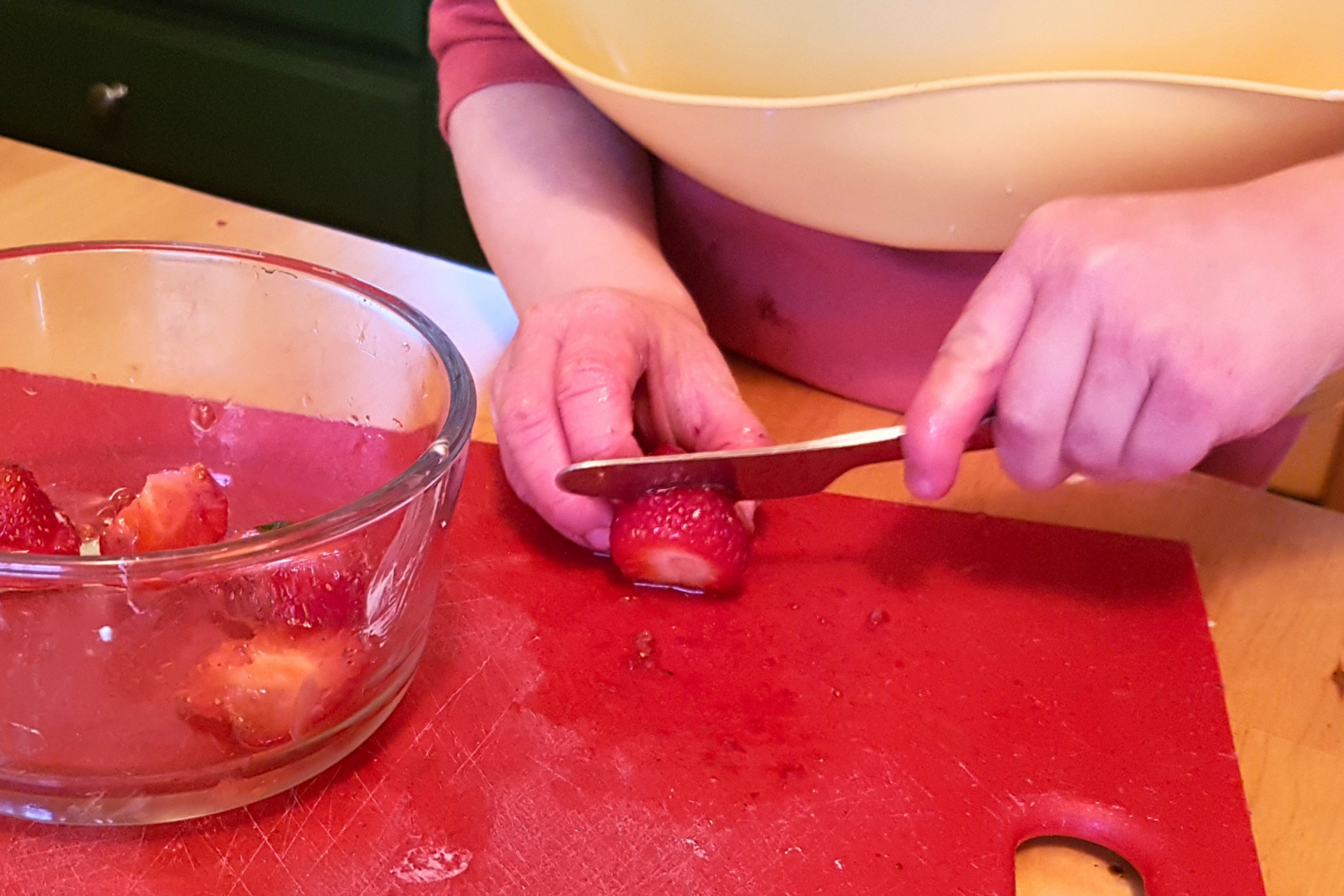
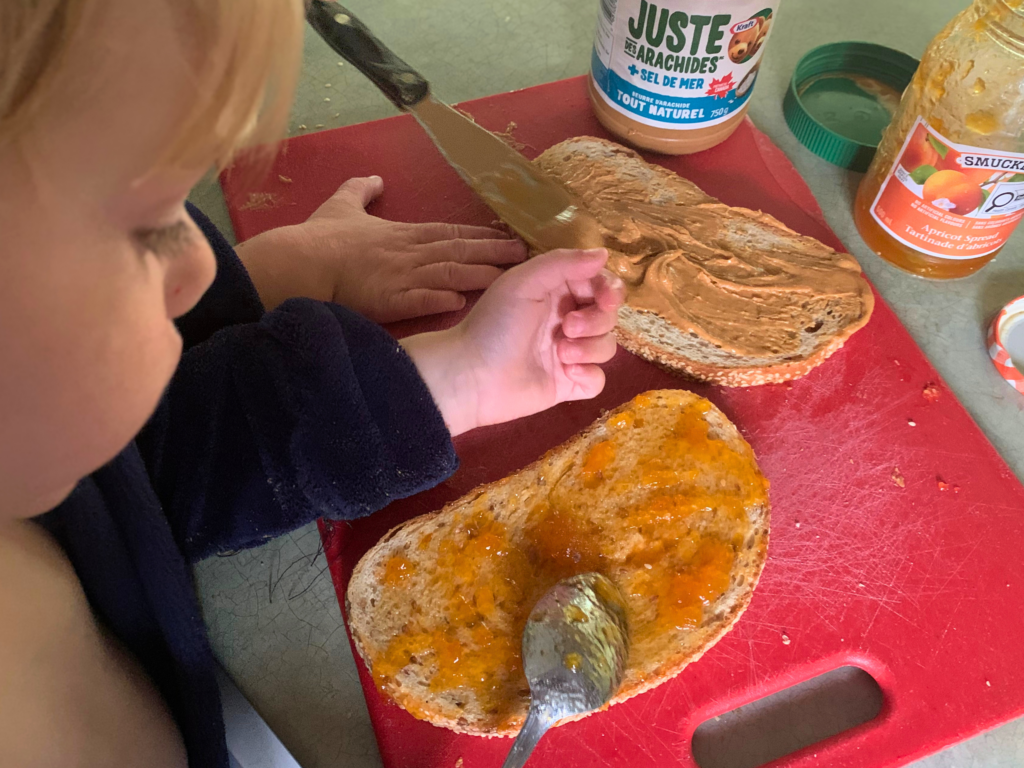
For tasks such as finger foods, using utensils, drinking from a glass, brushing his teeth, colouring, twisting open jars, and pouring, he consistently chooses his left hand. For other activities like throwing and catching balls (such as it is for a toddler), tracing sandpaper letters, and picking up objects, he switches back and forth between hands. Curiously, he favours unscrewing lids with his left hand and screwing them back on with his right hand. I’m sure there are ergonomic reasons a professional could highlight here.
It’s actually fascinating to watch him pick up toys and small objects from the floor, preferring to maximize his efforts rapidly switching left, right, left, right. Unlike most right-handed people, who will stop and start with only their right hand when faced with more than two objects to move.
As he gets older, I’m curious to see whether he’ll eventually write left-handed as well.
For most people, his left-handed preference will go unnoticed. He hasn’t picked up on being different yet, either. I’m really pleased that my efforts to mindfully observe were rewarded with this small gem of insight into how I can best support my child before he comes up against any unnecessary friction. We want to make sure we are providing him with the right tools to thrive as he learns new skills.
Should You Correct Hand Preference?
Maria Montessori believed that every child should be allowed to develop naturally at their own pace, honouring their individual potential. That we, as the adults, must position ourselves as the child’s guide. We can excel in this role through careful observation. If adjustments are needed, look first to the environment, not the child.
Historically, many schools pressured left-handed children to write with their right hand. My father (born a lefty) has shared he was forced to conform in school. Now, we are seeing a greater respect for the child as myths around left-handedness are dispelled and educators are more open to embracing, rather then repressing, individuality.
Preparing the Environment for a Little Lefty
How do you support a left-handed child? Support may require some left-handed tools, and an adapted environment to allowing natural hand preference to develop without correction. For us, a few small but meaningful tweaks were made in preparing the home environment to support our little lefty’s growth.
Left-Handed Scissors
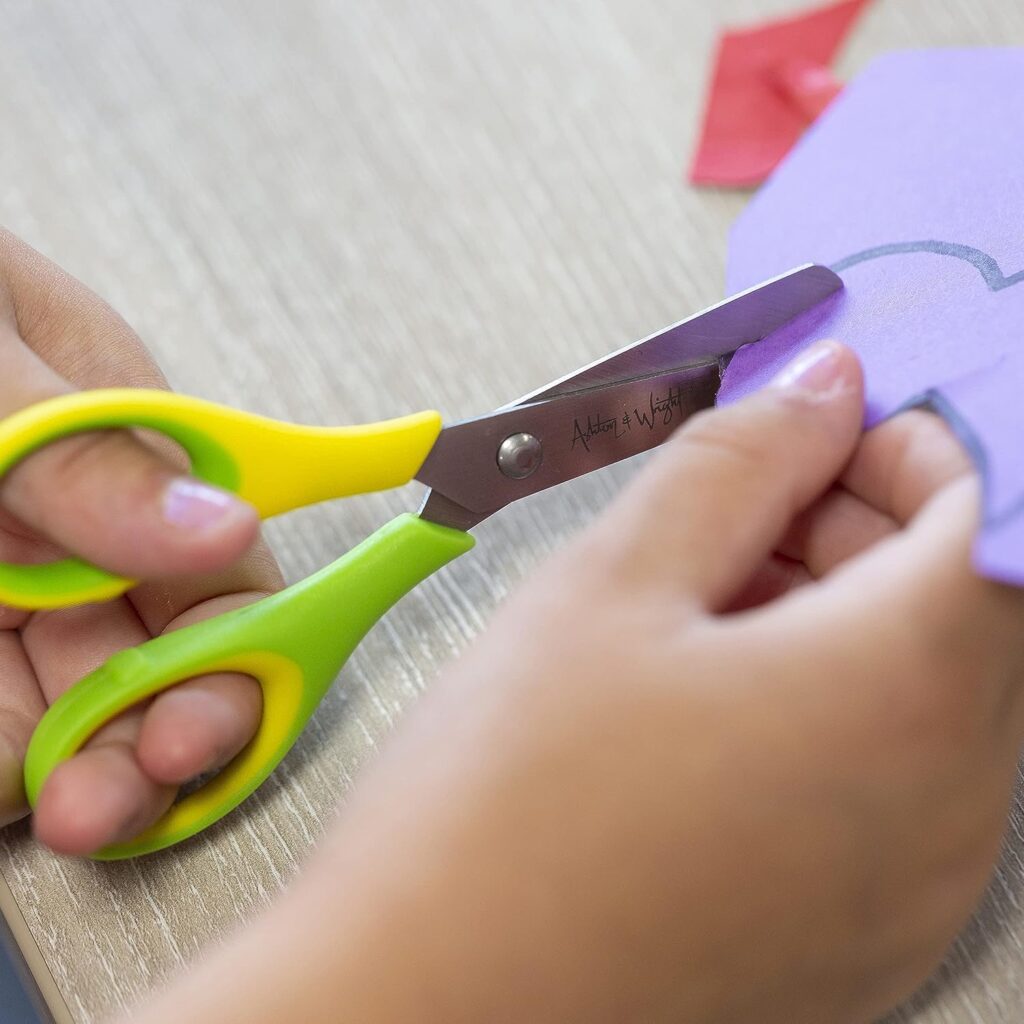
This was the first specialized tool we bought for Twin S. Left-handed scissors have the blades reversed, and sit more comfortably in the left hand. I think we circumvented a lot of unnecessary frustration, instead focusing on building hand strength and fine motor skills. If you have your child in a child care program, I would suggest inquiring if they have left-handed scissors available.
Best Seating Arrangements
Honestly, we just got lucky with this one. Twin S is always seated to the left of his brother for meal time at the dinning table. A lefty should always be seated to the farthest left. This gives them unimpeded movement to use their hands for eating, colouring, and otherwise working on a task.
When a left-handed child is seated on the right side of most people, their elbows and hands will keep hitting eachother from the limited space. That said, seating them like this is really convenient when my twins have to share something from the same bowl. Each child’s dominant hand is at an equal distance from the supplies placed between them.
So it’s just an important perspective to keep in mind, depending on the needs at the time!
Left Handed Child seated to the left when working
Working At An Art Easel / Chalkboard
If your left-handed child needs to paint on an art easel or write on a chalkboard, position them to the right of the board. This gives them more freedom of motion to work while reducing smudging. This shift to the right to avoid smudging can also be applied to drawing with markers or pens, as left-handed people often struggle with smudging their work.
Helpful Left-Handed Tools for Children
You’ll notice I don’t include affiliate links, and never will. Some of these items may be a novelty, and others may present a measurable improvement to your child’s quality of life. I don’t want to influence anyone into buying more than they needed. Too much waste exists already. But I do want to bring some awareness towards products you may have never known existed, for problems you might not have known could be easily fixed.
These are things we’re keeping in mind for the future:
- Left-handed measuring tapes and rulers
- Left-handed pencil grips
- Ergonomic keyboards and a left-handed computer mouse
- Lay-flat notebooks
- Left-handed can openers and vegetable peelers
- Sports equipment, such as left-handed baseball gloves
- Smudge-resistant pens
I can think of many examples in my own life where a simple change could have made a huge difference in my comfort, but I simply accepted the discomfort because I thought that was normal. I imagine the same thing might be happening with left-handed people navigating a right-handed world. There are so many practical left-handed products that can make Twin S’s work more seamless. We take for granted how much thought and research went into the ordinary tools we use every day, and some of that complexity is geared towards using your right hand. Due to living in a world designed for right-handers, lefties are also statistically more likely to experience injuries. So we have that to be mindful of.